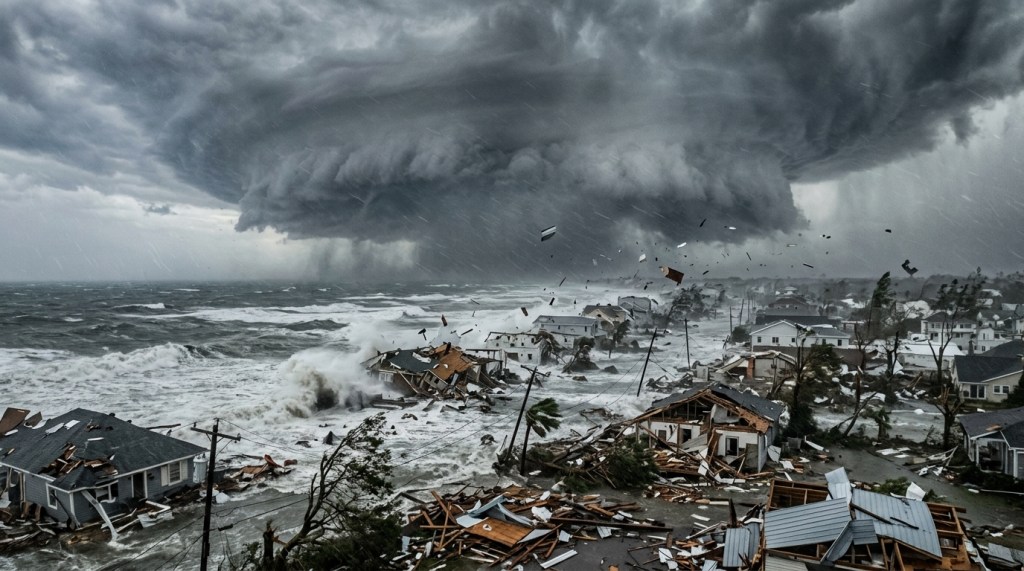
Hurricane Isaias hit Florida recently, knocking out power and destroying homes. My friend Jesse Bray was in the thick of it. Not knowing how to help, he fell back on what he knew: building software.
Here’s how Jesse built an app that is helping countless families affected by hurricanes…
By Jesse Bray
On October 9, a hurricane tore through our part of the Florida Panhandle.
Then the power went out.
Our food was ruined. We had no water, no electricity. Bills and debt were piling up. I had three little ones depending on me, and I was trying to hold myself together while wondering how we were going to get through it.
A few days later, I was waiting in line at a mobile food pantry.
That sentence still feels strange to write.
I’m a builder and a business owner. I’m usually the person trying to solve the problem or help someone else navigate it. Suddenly, I was the person sitting in line because my family needed food.
It was humbling.
It was also frightening.
When everything gets wiped out at once, your mind starts running in a hundred directions. What are we going to eat? When will the power return? What happens to the next bill? Who is offering help? Do we qualify? Where do we go? Which information is current?
The resources may exist, but they are scattered across government websites, nonprofit pages, local news reports, Facebook groups, and word of mouth.
Finding them becomes another job at precisely the moment you have the least energy to do it.
Standing in that line, anxious and overwhelmed, I did what I have always done when the world stops making sense.
I started building.
Art Therapy for a Software Guy
Some people paint. Some people journal. Some people work with their hands.
Apparently, my version of art therapy is building software on my phone during a disaster.
I started creating an app that could help people find assistance, resources, and support after a hurricane. I worked on it from my phone, with limited internet connectivity, while my family was still without power and trying to recover.
And, credit where it is due: Mint Mobile somehow proved to be disaster-proof.
That thin connection to the outside world was enough to let me keep working.
Building gave all the fear and nervous energy somewhere to go. Every screen I designed and every problem I worked through transformed a little bit of helplessness into something useful.
It was not a startup exercise.
There was no whiteboard session, market analysis, pitch deck, or carefully planned development sprint.
There was a hurricane.
There was a food line.
There was my phone.
And there was the growing conviction that families going through this should not have to work so hard just to find help.
The Tool I Needed Right Then
I called it AfterStorm.
AfterStorm is a free disaster-recovery app designed to help people find the assistance, information, and support they need after a hurricane.
The idea is simple: when someone’s world has just been turned upside down, give them a clearer place to begin.
One family may need food or drinking water. Another may need shelter, cleanup assistance, or help understanding disaster declarations. Someone else may be trying to document damage, locate local services, or figure out what aid is actually available in their area.
People in those situations do not need another maze.
They need useful information, presented clearly, without forcing them to become experts in the overlapping worlds of federal, state, local, and charitable disaster response.
I began building AfterStorm on Tuesday.
By the end of the week, the web app was live.
The iOS version is already in beta and, depending on Apple’s review process, should be publicly available shortly. Android will follow.
You can use the web version now at afterstorm.mrbray.com.
It is free because nobody standing in a food line after a hurricane should encounter a paywall between themselves and information that might help their family.
Designing From Inside the Emergency
I have spent much of my career building technology, but I have rarely built something while experiencing the problem this directly.
That changes how you think about a product.
When the user may be conserving battery power, every unnecessary screen matters.
When connectivity is unreliable, speed matters.
When someone is anxious, exhausted, and surrounded by urgent problems, clarity matters.
When a parent is simultaneously searching for drinking water and trying not to scare their children, simplicity is not merely a design preference.
It is compassion.
Building AfterStorm from inside the emergency stripped away the temptation to make it clever or complicated. The goal was not to impress anyone. The goal was to make the next step easier to find.
That is a very different design brief.
Technology Isn’t the Hero
Software cannot repair a roof, restore the electrical grid, replace a refrigerator full of food, or make a frightened family feel safe again.
People do that work.
Recovery happens because neighbors check on one another. Volunteers distribute meals and water. Utility crews work impossible hours. Churches, nonprofits, businesses, first responders, and government agencies show up. Strangers give what they have because someone else needs it more.
Technology is not the hero of that story.
But it can help people find the heroes.
It can shorten the distance between someone who needs help and someone prepared to provide it.
When you are living through a disaster, even one fewer dead end can matter.
Build From Where You Are
There is a polished version of entrepreneurship in which ideas appear during strategy sessions and products emerge according to carefully managed timelines.
AfterStorm did not happen that way.
It began while I was worried about food, water, power, debt, bills, and my children.
It began in line at a mobile food pantry.
It began on a phone with a fragile connection to the internet because that was what I had available.
Less than a week later, it was helping turn one family’s fear and frustration into something that might make another family’s recovery a little easier.
I wish we had never needed this app.
I wish no family did.
But when the storm passed and I looked at what remained, I realized I still had the ability to build.
So I built the tool I wished had been there when everything went sideways.
I hope you enjoyed Jesse’s story! We’ll be back to our regularly scheduled programming tomorrow. Thanks for reading!
More from the blog:
You Finally Closed Your Funding Round — Time to Panic?
The AI Buildout Is Bigger than the Pyramids
Save Money on Stuff I Use:
This platform lets me diversify my real estate investments so I’m not too exposed to any one market. I’ve invested since 2018 with great returns.
More on Fundrise in this post.
If you decide to invest in Fundrise, you can use this link to get $100 in free bonus shares!


Leave a Reply