Tremendous

An angel investor's take on life and business

  • My number one lesson from 4 years angel investing: it’s all about the founder. The founder of my latest investment is one of the best I’ve ever met.

    Nick Callegari is the founder of Verustruct, the company that is going to solve the housing crisis.

    Verustruct is developing a 3D printer that makes houses. The printer will build cement walls and embed the mechanical, electrical and plumbing along with them.

    This will let us build faster and cheaper than ever before.

    Before Verustruct, Nick led a team of engineers at SpaceX. He developed the extravehicular activity structure for the Polaris Dawn Crew Dragon mission.

    This structure enabled the first commercial spacewalk. If Nick’s structure had failed, those astronauts would’ve died.

    Here’s my thinking: if Nick can pull that off, 3D printing a house should be easy!

    It’s no secret that housing in America today is obscenely expensive. The median house price is $447,000. And if you want a newly built house, the average is $515,000.

    Add in 7 percent mortgage rates, and who the heck can afford this?

    If Verustruct can print houses en masse, quickly and cheaply with less skilled labor, those prices will fall off a cliff. 

    Finally, the average person will be able to afford a decent home.

    I’m incredibly excited about what Nick is doing at Verustruct. Some day, I hope to live in one of their houses myself!

    More on tech:

    Your Next House Will Be Built By Robots

    Why Short Decks Raise Millions

    The Question No Founder Asks

    Save Money on Stuff I Use:

    Fundrise

    This platform lets me diversify my real estate investments so I’m not too exposed to any one market. I’ve invested since 2018 with great returns.

    More on Fundrise in this post.

    If you decide to invest in Fundrise, you can use this link to get $100 in free bonus shares!

    Misfits Market

    I’ve used Misfits for years, and it never disappoints! Every fruit and vegetable is organic, super fresh, and packed with flavor!

    I wrote a detailed review of Misfits here.

    Use this link to sign up and you’ll save $15 on your first order. 

  • The hottest startup is a great place to lose your money…

    • Theranos
    • FTX
    • WeWork
    • Clubhouse

    Investors threw cash at these companies. 

    Theranos and FTX turned out to be frauds. WeWork and Clubhouse struggled to make a viable business. 

    Either way, the investors got torched.

    When Investors Get Sloppy

    When a startup is hot, investors don’t do diligence. This lets bad investments slip through.

    Normally, a VC talks to customers to see if the product is as good as it looks. They also review bank statements, revenue and burn.

    In a hot deal, investors throw that diligence checklist out the window. 

    In the case of Theranos, investors put in millions without ever seeing the device. Even when I invest $10,000, I want to see a prototype!

    Are We About to Fund the Next FTX?

    Markets are as hot as in 2021. I’m seeing seed rounds at $75 million.

    I can feel it all happening again.

    In a hot market, another FTX or Theranos can slip through. It feels like everyone’s making money. You don’t want to be left behind, do you?

    So you skip your diligence, just this once. 

    All the top investors are in this company. It must be a winner!

    How I Approach Hot Deals

    I do the same diligence for every company. 

    I work quickly. In fact, I can usually get a founder a decision within 24 hours.

    But I’m definitely looking into product, revenue, and burn. I’m also going to research the team.

    If I skip those steps and the company implodes, I’ll be kicking myself. If I did my research and the company dies, at least I tried my best. 

    Wrap-Up

    Everyone wants to be in the hottest deal. 

    We’re afraid to miss a big winner. We don’t want to seem insignificant.

    But odds are, you’re not missing anything. 

    I’m staying focused on real businesses raising at reasonable prices. If the rest of the market wants to go crazy, let it.

    More on tech: 

    How Top Startups Break the Rules

    Why Short Decks Raise Millions

    The Question No Founder Asks

    Save Money on Stuff I Use:

    Fundrise

    This platform lets me diversify my real estate investments so I’m not too exposed to any one market. I’ve invested since 2018 with great returns.

    More on Fundrise in this post.

    If you decide to invest in Fundrise, you can use this link to get $100 in free bonus shares!

    Misfits Market

    I’ve used Misfits for years, and it never disappoints! Every fruit and vegetable is organic, super fresh, and packed with flavor!

    I wrote a detailed review of Misfits here.

    Use this link to sign up and you’ll save $15 on your first order. 

  • What’s the best way to kill a startup? Run the bank account to $0? Lose customers? No.

    The best way to kill a startup is for the co-founders to start fighting. 

    I need to know how strong a team’s relationship is. So I ask every entrepreneur, “How did you meet your co-founder?”

    Here are some answers I hear…

    The Repeat Co-Founders

    “We worked together at our last startup, GiggleGizmo. It failed, but Jim was always there, shipping product.”

    I love teams that have worked together before. If they could get along at GiggleGizmo, they should be able to get along at their new startup too. 

    The Childhood Pals

    “We’ve been friends since childhood. We grew up on the same street.”

    Even better! 

    There will be some big conflicts as they build this startup. But since they have a strong relationship, I’m confident they’ll resolve them.

    The Mom and Pop Startup 

    “My co-founder is my wife, we’ve been married 10 years.”

    This is way more common than you’d think. 

    Like the longtime friends, a married couple has been through conflicts before. Since they’re still married, we know they resolved them! 

    The Fast Friends

    “We met at a co-founder speed dating event.”

    This answer worries me a little. 

    They haven’t known each other for long. Will they be able to get along for the 10+ years it takes to get to IPO? 

    I need to find out more about their relationship. How do they divide tasks? What do they do when they disagree?

    Wrap-Up

    Founders who are childhood friends aren’t a sure bet. Founders who just met aren’t guaranteed to fail.

    But a founding team that knows each other well and can resolve conflicts is a big plus.

    If you’re starting a company, consider working with someone you know well. You’re more likely to make it through the hard times.

    In the end, business is all about people.

    More on tech:

    Meet My Latest Investment: Mozi

    3 Things I Hate Seeing in a Pitch

    How Top Startups Break the Rules

    Save Money on Stuff I Use:

    Fundrise

    This platform lets me diversify my real estate investments so I’m not too exposed to any one market. I’ve invested since 2018 with great returns.

    More on Fundrise in this post.

    If you decide to invest in Fundrise, you can use this link to get $100 in free bonus shares!

    Misfits Market

    I’ve used Misfits for years, and it never disappoints! Every fruit and vegetable is organic, super fresh, and packed with flavor!

    I wrote a detailed review of Misfits here.

    Use this link to sign up and you’ll save $15 on your first order. 
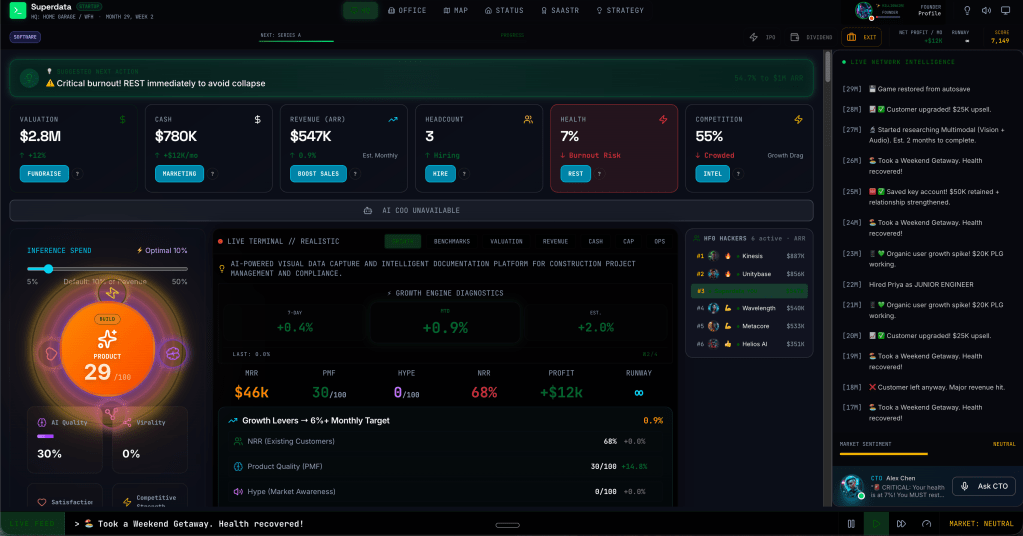
  • I opened Product Hunt this morning, looking for a unicorn. Here’s how I do it…

    Find What’s Exciting

    First, I look for products that excite me.

    What have I never seen before? What would I want to use? As Paul Graham said…

    “Curiosity is the best guide. Your curiosity never lies, and it knows more than you do about what’s worth paying attention to.”

    Is it a Feature or a Business?

    I’m looking for products you can build a business around. 

    Maybe I see an app to clean up my inbox. That’s useful, but can you build a business around it? 

    An inbox clean-up tool is a feature for an e-mail app. It’s hard for the clean-up tool to stand on its own. 

    The Startup Behind the Product

    Once I’ve found a product I like, I look into the startup behind it.

    I look up the company on Crunchbase and see how much money they’ve raised. I like to see $750,000 or less. That means they haven’t raised a seed round yet. 

    I also check where the startup is based. This morning, I found an awesome release, but the startup behind it is in Hong Kong. That market is too unfamiliar for me, so I passed. 

    Do Upvotes Matter?

    I don’t worry too much about whether a startup is #1 or #5 on Product Hunt’s list. But I don’t usually look below the top ten.

    Once you’re in the top ten, you’re splitting hairs. #1 isn’t necessarily better than #5.

    I pay attention to the Product Hunt ranking. But in the end, I use my own judgement.

    Meeting the Founder

    When I see a startup I like, I cold message the founder on e-mail or LinkedIn. I say something like this…

    “Hi Jim! 

    I saw your AI therapy app on Product Hunt. I loved the calming nature scenes!

    I’m an angel investor in the NYC area. I’d love to learn more!

    Francis”

    I keep the message short. I also like to be specific about why their product grabbed me. This shows the founder I’m not sending him a copy-pasted message.

    Never be afraid to cold message a founder.

    Wrap-Up

    Product Hunt is a great place to troll for deals. I see the very newest products and how our industry ranks them.

    It’s also a lot of fun! I love the creativity of all these builders, making everything from AI children’s stories to stock trading apps. 

    Somewhere in all those releases is a billion dollar company. I just have to find it.

    More on tech: 

    How Top Startups Break the Rules

    Why Short Decks Raise Millions

    How Founders Can Improve Their Pitch by Watching Game Film

    Save Money on Stuff I Use:

    Fundrise

    This platform lets me diversify my real estate investments so I’m not too exposed to any one market. I’ve invested since 2018 with great returns.

    More on Fundrise in this post.

    If you decide to invest in Fundrise, you can use this link to get $100 in free bonus shares!

    Misfits Market

    I’ve used Misfits for years, and it never disappoints! Every fruit and vegetable is organic, super fresh, and packed with flavor!

    I wrote a detailed review of Misfits here.

    Use this link to sign up and you’ll save $15 on your first order.

  • Techbros love nicotine pouches. But these pouches are terrible for your health. Here’s why you want to avoid them…

    Nicotine pouches put you at risk of cancer, heart disease and dental problems. Nicotine is a vasoconstrictor, meaning that it narrows your blood vessels. This is very bad for your cardiovascular health. 

    I’ve heard many people say that cigarettes are dangerous but nicotine is not. This just isn’t true.

    How I Quit Nicotine

    If you love nicotine, I get it! I used to smoke cigarettes for years.

    On January 20th, 2015, I quit. It’s one of the best things I ever did in my life.

    It’s not worth the health risks. Life’s too short to be a slave to nicotine.

    I didn’t think I could quit, but it turned out to be much easier than I thought.

    Within a couple of days, I started to feel healthier, more energetic, even exhilarated.

    I quit by slowly decreasing my nicotine consumption. I went from 20 cigarettes a day to 10 the next week, then 5, then 0.

    For other people, quitting cold turkey works better. There is no right or wrong way, so long as you quit.

    Nicotine Isn’t Helping You

    I used to think nicotine gave me an edge. It didn’t.

    Nicotine withdrawal made me jittery. Then, I used nicotine to kill the jitters.

    Nicotine was creating a problem and then solving it. But when I threw the cigarettes away, the problem was gone!

    Wrap-Up

    If you’re reading this, you’re probably building something ambitious. If nicotine ruins your health, you’ll never reach your goals.

    I can’t tell anyone what to do. 

    But I want everyone to know that nicotine pouches aren’t safe. And you really can quit. 

    Whatever decision you make, I wish you the best. 

    More on health:

    How I Quit Smoking

    How I Learned to Cook

    Using Grok as My Personal Trainer

    Save Money on Stuff I Use:

    Fundrise

    This platform lets me diversify my real estate investments so I’m not too exposed to any one market. I’ve invested since 2018 with great returns.

    More on Fundrise in this post.

    If you decide to invest in Fundrise, you can use this link to get $100 in free bonus shares!

    Misfits Market

    I’ve used Misfits for years, and it never disappoints! Every fruit and vegetable is organic, super fresh, and packed with flavor!

    I wrote a detailed review of Misfits here.

    Use this link to sign up and you’ll save $15 on your first order. 

  • Here are 3 things I hate seeing in a pitch…

    1. Letters of Intent (LOI’s). Also known as Letters of Nothing. Prospective customers sign these letters, saying they “intend” to buy your product. But will they really? Who knows.

      These letters may sound good, but they mean absolutely nothing.

      Some founders spend months chasing an LOI. This is wasted time.
    2. “Line of sight.” As in “We have a line of sight to $10 million ARR.” I see this phrase all the time in pitch decks.

      What on earth does it mean?

      You think that maybe someday you’ll have $10 million ARR? Fine, but that is meaningless today.

      Talk about where you actually are now.
    3. “Pipeline.” As in “We have over $100 million ARR in our pipeline.”

      If you send a cold e-mail to someone that is never returned, they could be counted as part of your “pipeline.” This is another meaningless metric.

      What matters is the customers you have today, not who’s in your CRM. 

    What to Focus On Instead

    Instead of LOI’s, “lines of sight,” and pipeline, talk about where your business is today. 

    “We have 3 customers paying $100 a month.” That’s not a lot of money. But it’s concrete and it’s a start!

    Maybe you don’t have any customers yet. In that case, focus on your product and team. You could say something like this:

    “We are a team of 3 engineers shipping new product daily.” 

    Now that’s exciting!

    You just gave me useful info on your skills and what you’re building. That would impress me more than an LOI for $100 million. 

    Wrap-Up

    There’s nothing wrong with being an early stage company!

    But focus on the things that matter. Sell your team’s skills, your product, and your first customers.

    That beats LOI’s and “lines of sight” any day.

    More on tech:

    Meet My Latest Investment: Mozi

    How Top Startups Break the Rules

    How Founders Can Improve Their Pitch by Watching Game Film

    Save Money on Stuff I Use:

    Fundrise

    This platform lets me diversify my real estate investments so I’m not too exposed to any one market. I’ve invested since 2018 with great returns.

    More on Fundrise in this post.

    If you decide to invest in Fundrise, you can use this link to get $100 in free bonus shares!

    Misfits Market

    I’ve used Misfits for years, and it never disappoints! Every fruit and vegetable is organic, super fresh, and packed with flavor!

    I wrote a detailed review of Misfits here.

    Use this link to sign up and you’ll save $15 on your first order. 

  • Two co-founders in an office in SF — that’s our image of a successful startup. But many of my best investments don’t look like that…

    The best companies often break a rule. Let’s look at some of those rules and how successful companies break them.

    You Need a Cofounder 

    We tell everyone they have to have a co-founder. But my most successful investment so far was in a solo founder, Ali at Micro1.

    Look at Amazon, Facebook or Oracle. All solo founders.

    Maybe having one person making decisions forces a company to move faster. 

    There are benefits to having co-founders. They bring skills you lack and share the workload.

    But never rule out a great solo founder.

    You Have to Be In Person 

    Everyone is rushing back into offices. But my most successful investment has a lot of its team remote. Coinbase, Airbnb and Wiz are remote too.

    Remote work lets you hire the best talent no matter where they live. That’s a huge advantage.

    In-office work has benefits too. It can be easier to cooperate in person.

    But you’re giving up a global talent pool. 

    You Have to be in SF

    One of my best investments, Rilla, is in New York. And they’re not even in Manhattan — they’re in Long Island City!

    Those guys work as hard as anyone in San Francisco. And they’re growing really fast.

    A great founder will succeed in any town in America. 

    Wrap-Up

    There’s nothing wrong with having a co-founder, an office, and living in SF. I have some awesome investments that check all those boxes.

    But great companies tend to break the rules. My job is to find those outliers.

    What rules are you breaking, and why?

    More on tech:

    How Founders Can Improve Their Pitch by Watching Game Film

    Why Short Decks Raise Millions

    The Question No Founder Asks

    Save Money on Stuff I Use:

    Fundrise

    This platform lets me diversify my real estate investments so I’m not too exposed to any one market. I’ve invested since 2018 with great returns.

    More on Fundrise in this post.

    If you decide to invest in Fundrise, you can use this link to get $100 in free bonus shares!

    Misfits Market

    I’ve used Misfits for years, and it never disappoints! Every fruit and vegetable is organic, super fresh, and packed with flavor!

    I wrote a detailed review of Misfits here.

    Use this link to sign up and you’ll save $15 on your first order. 
  • Founders: have you ever watched yourself pitch? Peyton Manning spent 20 hours a week watching game film. Here’s what you can learn from him…

    Careful study of game film gave Manning a huge advantage. But when most founders pitch investors, they just do meeting after meeting with little idea how they performed. 

    How to Use Game Film

    Here’s how founders can use game film to get an edge…

    1. Get the right tech. I record every single meeting I do using a tool called Fathom. It’s free and easy to use.
    2. Replay key meetings. You don’t have to re-watch every meeting you do. But re-watching some important meetings shortly afterward, while they’re fresh in your mind, can help you a lot.
    3. Are you talking too much? Fathom shows you the exact percentage of time you spoke. In my experience, fundraising meetings go best when the founder speaks about 60% of the time and the investor speaks around 40%. Most founders talk way more than that. That’s a mistake — it doesn’t allow investors enough time to ask questions.
    4. Look at the investor’s body language. Are they leaning forward with interest? Are their arms crossed in a defensive or skeptical pose? This tells you how they’re receiving your message.
    5. Ask AI for help. Fathom lets you easily copy the full transcript of your meeting. Dump that transcript into Grok or ChatGPT. Prompt it like this: “I’m a startup founder pitching an investor. Here’s a transcript of a meeting. How can I improve my pitch?”

    Investors Should Be Watching Game Film Too!

    I watch game film of my most important founder meetings. 

    When there’s a company I’m really interested in, I re-watch our call after so I can pick up on any details I may have missed. And sometimes, I dump the transcript into Grok and ask how I can improve.

    Grok told me to be more explicit about what I liked when I meet a startup. Sometimes I’m so eager to ask question after question that I forget to do that!

    Wrap-Up

    Pitching is a skill. Like any skill, you get better with practice.

    Watching yourself is one of the best ways to learn. You see what you do well and what you do poorly.

    Whether you’re Peyton Manning, a startup founder, or me, watching game film gives you an advantage. Your competitors aren’t doing it. 

    Press that advantage and raise more money!

    More on tech: 

    Why Short Decks Raise Millions

    How to Run a Pitch Meeting

    How to Tell If Investors Are Really Interested

    Save Money on Stuff I Use:

    Fundrise

    This platform lets me diversify my real estate investments so I’m not too exposed to any one market. I’ve invested since 2018 with great returns.

    More on Fundrise in this post.

    If you decide to invest in Fundrise, you can use this link to get $100 in free bonus shares!

    Misfits Market

    I’ve used Misfits for years, and it never disappoints! Every fruit and vegetable is organic, super fresh, and packed with flavor!

    I wrote a detailed review of Misfits here.

    Use this link to sign up and you’ll save $15 on your first order.

  • This angel investing thing just might work! My “fund” is beating well over 90% of VC’s, according to AngelList data.

    How My “Fund” Stacks Up Against the Competition

    So far, my “fund” sits at 1.65x TVPI. This means that the total value of all my investments is 65% more than what I paid.

    Here’s how that stacks up against other funds…

    I made my first investment in June of 2021. That puts me in the 2021 Vintage.

    For 2021 funds, the 90th percentile for TVPI is 1.58x. At 1.65x, I’m well above the threshold for the 90th percentile. 

    AngelList doesn’t break down returns any more finely than that. So, we don’t know if my exact percentile is 93rd, 95th, etc. 

    Cracking the the 90th Percentile

    There are 35 investments in this “fund,” in total. That’s a typical number of names for an early stage venture fund. I closed “Fund 1” last month and now I’m investing out of “Fund 2.” 

    I still have about 15% of “Fund 1” remaining. That cash will go as secondary bets into the best companies, which should further increase my returns.

    So far, only 2 companies in Fund 1 have gone out of business. That really surprises me. I figured most of them would be gone by now!

    Avoiding those zeroes has helped the portfolio. But what has really moved the needle is the 3-4 most successful companies.

    So far, the best among them is Micro1, which recently announced its Series A at a $500 million valuation

    Three other startups in “Fund 1” have crossed $10 million ARR, a key milestone. I’m hoping to get multiple unicorns out of this fund, and I think it’s achievable.  

    How I Picked My Investments

    My method for picking startups is pretty simple.

    I look for builder founders working on huge problems. If I see early signs that their product is catching on, I place a bet.

    I look carefully at market size and traction. I also only invest in founding teams that can build a great product in-house.

    To find the 35 startups in Fund 1, I probably looked at 5,000 or more. That’s what the job is: a relentless winnowing of companies to find the very best. 

    Going from Markups to Cold, Hard Cash 

    Having strong TVPI is nice, but we can’t eat markups. So far, all my returns are on paper.

    That’s typical for a fund as new as mine. Most 4 year old funds have little or no actual cash returns, or DPI.

    If you invest at pre-seed and seed like I do, it can take 10-15 years for your best companies to finally hit an IPO. So, I would not expect DPI at this point.

    But eventually, those paper markups need to convert to cash. I’m watching carefully for opportunities to get liquidity sooner through secondary sales.

    Wrap-Up

    I have a long, long way to go with this portfolio. Good returns today don’t guarantee anything in the future.

    But for now, this is good progress.

    Even though I’m a small investor, I want to do the best job I can. That’s why I think of my investments as a “fund,” even though they’re not exactly Sequoia.

    I want to learn the business using small sums of money. Later on, I’ll be able to deploy larger sums intelligently using what I learned. 

    You want to learn poker at the penny ante table. Once your game is strong, you’ll be ready to join the high rollers. 

    More on tech: 

    Three Things Investors Should Never Do

    Meet My Latest Investment: Mozi

    My New Investment Strategy

    Save Money on Stuff I Use:

    Fundrise

    This platform lets me diversify my real estate investments so I’m not too exposed to any one market. I’ve invested since 2018 with great returns.

    More on Fundrise in this post.

    If you decide to invest in Fundrise, you can use this link to get $100 in free bonus shares!

    Misfits Market

    I’ve used Misfits for years, and it never disappoints! Every fruit and vegetable is organic, super fresh, and packed with flavor!

    I wrote a detailed review of Misfits here.

    Use this link to sign up and you’ll save $15 on your first order. 

  • Three things investors should never do during a founder meeting…

    1. Don’t be late. Seems obvious, right? But you wouldn’t believe how many people get this wrong.

      Founder time is the scarcest resource in the world. Do not waste it.

      I like to show up a little early. Then, I know I won’t keep anyone waiting.
    2. Don’t use your phone. Either give this founder your full attention or don’t meet with them at all.

      That means putting your phone down.

      I also don’t want to see you on e-mail, X, or anything else. Give the entrepreneur the respect he deserves.
    3. Don’t have side conversations. I saw a particularly bad example of this at a pitch event this week.

      As the founder presented, the investors couldn’t stop talking among themselves. It got so bad that I could barely even hear the founder anymore.

      This is very rude behavior. When the founder is talking, be silent.

      When it’s time for questions, by all means ask some! But don’t chat with the person next to you while the entrepreneur is speaking.

    Wrap-Up

    These 3 don’ts come down to one easy rule: give the entrepreneur your attention and respect.

    This pitch could be the most important moment of their professional life.

    You don’t have to invest in their company. But you do need to take this meeting seriously and treat them right.

    If you treat founders with respect, you can go to bed at night knowing you did the right thing. And as your reputation spreads, you might be surprised at the awesome deals that start coming to you. 

    Have a great weekend, everyone!

    More on tech: 

    How to Get Into Hot Startups

    3 Ridiculously Easy Things Every Investor Should Be Doing

    My New Investment Strategy

    Meet My Latest Investment: Mozi

    Save Money on Stuff I Use:

    Fundrise

    This platform lets me diversify my real estate investments so I’m not too exposed to any one market. I’ve invested since 2018 with great returns.

    More on Fundrise in this post.

    If you decide to invest in Fundrise, you can use this link to get $100 in free bonus shares!

    Misfits Market

    I’ve used Misfits for years, and it never disappoints! Every fruit and vegetable is organic, super fresh, and packed with flavor!

    I wrote a detailed review of Misfits here.

    Use this link to sign up and you’ll save $15 on your first order.