Tremendous

An angel investor's take on life and business

  • I recently spoke with a reader of this blog. He noticed something strange about a lot of the other articles in his inbox.

    “Most of the newsletters I get seem to be written by AI,” he explained.

    He’s probably right! But I never, ever use AI to write this blog. Here’s why…

    Respecting Your Time

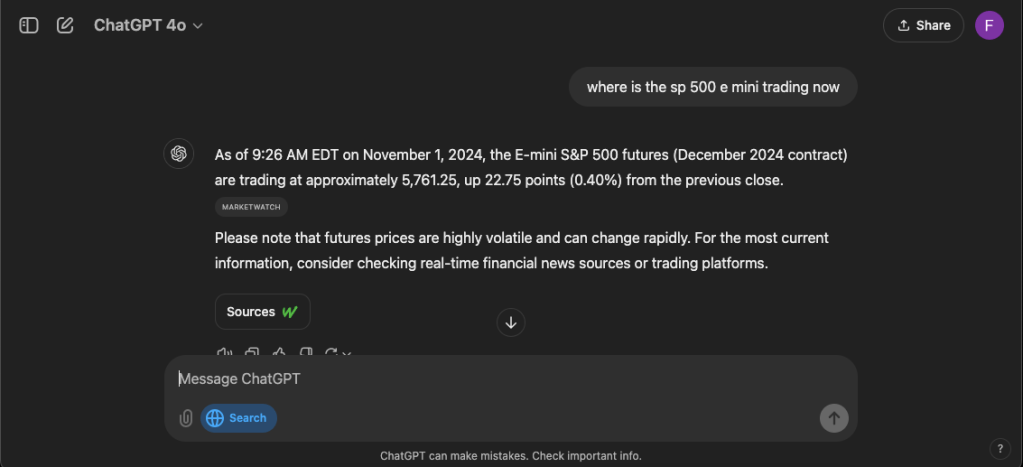
    You don’t need me to type prompts into ChatGPT for you. And if a blog is written by AI, that’s what they’re doing.

    My goal is to give you an inside view of technology and business from someone who’s in the market every day.

    An AI cannot do that. That requires human experience.

    Writing Helps Me Figure Out What I Think

    As I write, I work out a perspective. And my viewpoint has to be clear, so it makes sense when you read it!

    Here’s an example: in February, I wrote about how consumer subscriptions can make great investments.

    I’ve tended to focus on SaaS and marketplaces in the past. But seeing Duolingo grow into a $10 billion monster, I had to admit consumer subscriptions could produce giant outcomes.

    The research and thinking I did for that post really informed my recent investment in Zest, which is basically Duolingo for cooking. When I read that deal memo, I knew that consumer subscriptions could become big winners.

    Why I Started This Blog in the First Place

    I started this blog in November 2020. It looked like we were going into a second COVID lockdown here in North Jersey. I needed a new, lockdown proof hobby.

    As it happened, we never did have that 2nd lockdown. But the habit of writing stuck — this is the 929th post!

    If I have AI do the writing for me, there goes my hobby!

    As AI becomes increasingly powerful, we must be careful not to let it replace the things we enjoy.

    Perhaps you enjoy playing the guitar. Some day, AI may make better songs than you can.

    But that’s okay! There’s joy in the handmade and imperfect.

    Where AI Fits In

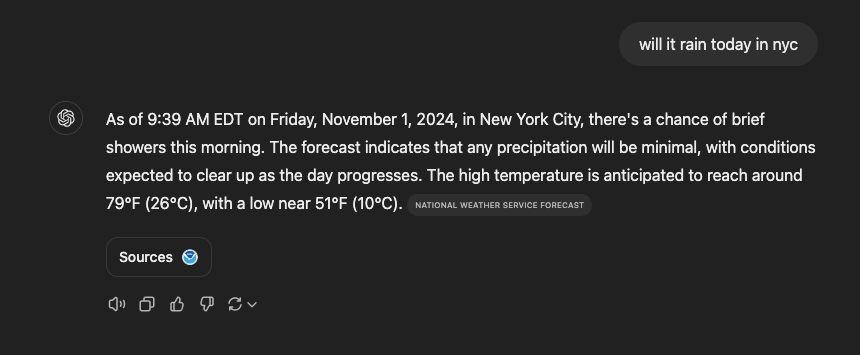
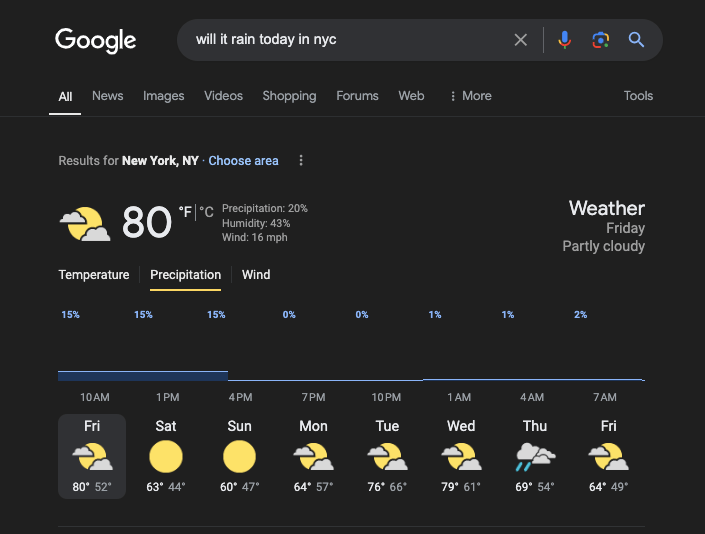
    While I never use AI to do the writing for me, AI can be very helpful in research.

    When I wrote about Astribot recently, I was struck by how different companies are converging on the same design. It reminded me of how Leibniz and Newton both invented calculus independently around the same time.

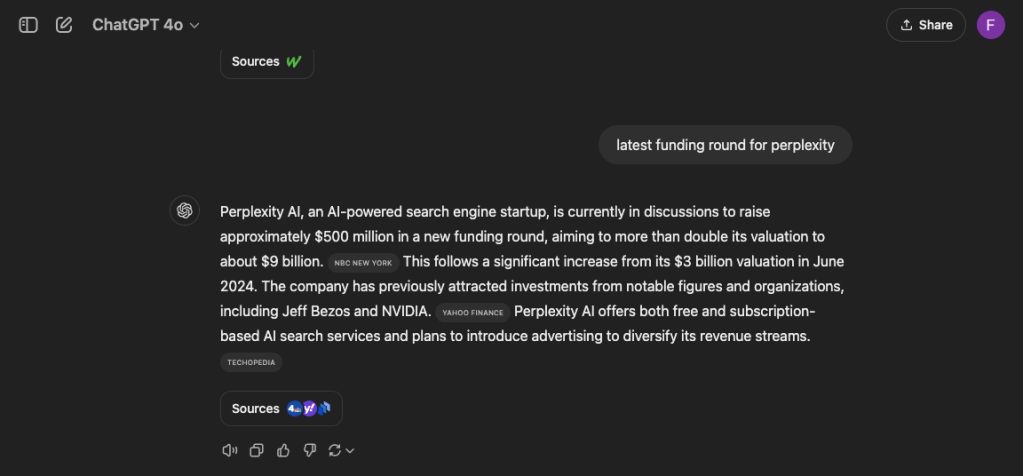
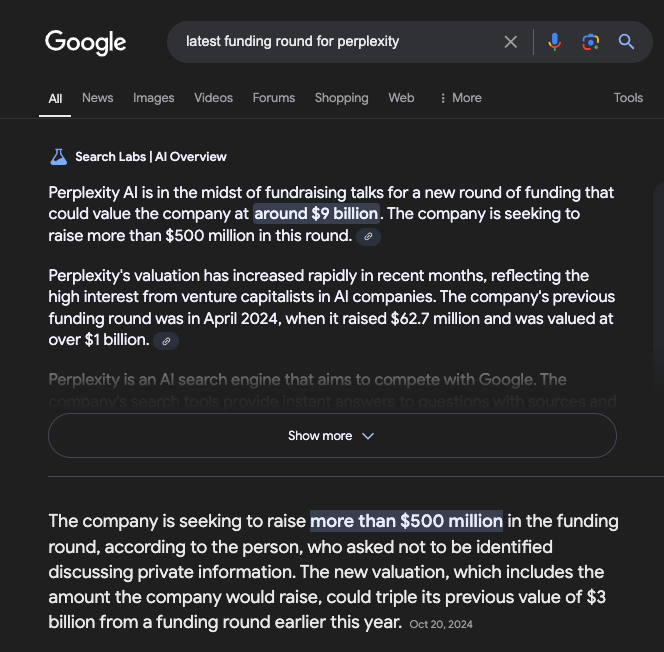
    I wanted to refresh my memory on the Newton/Leibniz story so I could relate the details accurately. So, I had Perplexity get me up to speed.

    Using AI as a research assistant is helpful and makes the blog better. It’s like Google on steroids.

    Wrap-Up

    AI is an incredible new technology. But too often, we’re letting it drain the authenticity and humanity out of our interactions with others.

    I get laudatory comments on my LinkedIn posts that were clearly written by a computer. Your inbox is probably flooded with machine written content.

    That’s something I’m never going to do here. Dumping machine-written writing on you doesn’t serve your purposes, nor does it serve mine.

    Looking forward to telling you about more interesting happenings in tech and business!

    What do you think of AI writing? Leave a comment and let us know!

    If you enjoyed this post, subscribe for more like this!

    More on tech:

    Meet My Latest Investment: Zest

    How to Get Started Angel Investing

    Talking Follow-On Strategy with JCal

    Save Money on Stuff I Use:

    Fundrise

    This platform lets me diversify my real estate investments so I’m not too exposed to any one market. I’ve invested since 2018 with great returns.

    More on Fundrise in this post.

    If you decide to invest in Fundrise, you can use this link to get $100 in free bonus shares!

    Misfits Market

    I’ve used Misfits for years, and it never disappoints! Every fruit and vegetable is organic, super fresh, and packed with flavor!

    I wrote a detailed review of Misfits here.

    Use this link to sign up and you’ll save $15 on your first order. 
  • When I first moved to New Jersey in 2014, I weighed 40 pounds more than I do today. I also had a lot less money than I do now. One of the key ways I got from there to here was learning how to cook.

    Gradually, I picked up the basics from the blog Budget Bytes, among others. I made a lot of things, some good, some barely edible.

    Bit by bit, I learned how to cook. But what if I could’ve used an app that would guide me every step of the way, teaching important concepts even as I make yummy food?

    That didn’t exist back then. But it does now.

    My latest investment, Zest, is basically Duolingo for cooking. It teaches you the basics of chopping, seasoning and cooking in a fun way — your teacher is a giant leek!

    Loma the Leek makes me smile, but the recipes are serious. They have a former chef from Alinea developing them. If you don’t know it, Alinea has been called the best restaurant in the world.

    What’s great about Zest is that the recipes are doable. A top chef developed them, but they’re written with an eye toward the average person.

    Going out to eat for every meal costs a fortune. What’s more, restaurants have no incentive to keep you healthy — only to keep you coming back.

    Cooking for yourself puts money in your pocket and keeps you slim. And Zest is a great way to learn how.

    Check out Zest and make something delicious!

    If you enjoyed this post, subscribe for more like this!
    Have a great weekend, everybody!


    More on tech:

    Why I Passed on a High Growth Startup

    How to Get Started Angel Investing

    Talking Follow-On Strategy with JCal

    Save Money on Stuff I Use:

    Fundrise

    This platform lets me diversify my real estate investments so I’m not too exposed to any one market. I’ve invested since 2018 with great returns.

    More on Fundrise in this post.

    If you decide to invest in Fundrise, you can use this link to get $100 in free bonus shares!

    Misfits Market

    I’ve used Misfits for years, and it never disappoints! Every fruit and vegetable is organic, super fresh, and packed with flavor!

    I wrote a detailed review of Misfits here.

    Use this link to sign up and you’ll save $15 on your first order. 
  • iWashie was raising $600,000 at a very attractive valuation. It was growing like crazy. But I passed.

    This company is a composite and I changed the name and some identifying details. But it illustrates a key point: the size of the market matters.

    An Amazing Startup

    iWashie is a SaaS product for car washes. It gives them a great website, accounting tools, and an online store where you can book washes and detailing.

    The car washes who were using iWashie loved it.

    The fast website led to a lot more customers. Churn was practically zero.

    When I met with the founders, they seemed very smart and dedicated.

    The Numbers

    iWashie was growing like crazy.

    For the last 6 months, it had grown over 35% month over month, an outstanding record. Annual Recurring Revenue (ARR) was closing in on $500,000.

    iWashie was also raising at a very reasonable valuation: just $5 million. This may be because the founders were in the middle of the country, not the big markets of SF or NYC.

    But There’s One Problem

    At this point, you’re probably thinking “Francis, why the heck did you not invest in this?”

    Well, for all the awesome things about iWashie, there was one big problem: the market.

    There are only about 17,000 car washes in America. iWashie was charging them $500/month for its product.

    If they grabbed every single car wash in America as a customer, they’d still only make about $100 million a year in revenue.

    For a company to become a unicorn, they need to get to at least $100 million a year in revenue. To IPO, it can be even more.

    Although they have a great product, they’ll never get every car wash as a customer. And being so customized, the product didn’t easily slot into other businesses outside car washes.

    Wrap-Up

    As much as I loved these founders, I found myself wishing they were in a different business.

    Angel investors have to go after giant opportunities. It’s the only way we’ll get those billion dollar outcomes that pay for all the failed startups!

    So, as much as I loved the iWashie guys, I had to pass. This can be a great business, but it’s not a great venture capital investment.

    Would you have invested in iWashie? Why or why not?

    Leave a comment and let us know!

    If you enjoyed this post, subscribe for more like this!

    More on tech:

    How to Get Started Angel Investing

    Talking Follow-On Strategy with JCal

    They Passed on Airbnb. Here’s Why.

    Save Money on Stuff I Use:

    Fundrise

    This platform lets me diversify my real estate investments so I’m not too exposed to any one market. I’ve invested since 2018 with great returns.

    More on Fundrise in this post.

    If you decide to invest in Fundrise, you can use this link to get $100 in free bonus shares!

    Misfits Market

    I’ve used Misfits for years, and it never disappoints! Every fruit and vegetable is organic, super fresh, and packed with flavor!

    I wrote a detailed review of Misfits here.

    Use this link to sign up and you’ll save $15 on your first order. 
  • I recently met a great young lady named Jill*. She works at a major tech company and wanted to get into angel investing. But she didn’t know where to start.

    Three years ago, I was where Jill is. Today, I have 28 investments and counting.

    Here’s the best way to get started:

    1) Read the book Angel by Jason Calacanis. It’s less than 300 pages and it’s not boring.

    Jason tells you step by step exactly how to invest in tech startups. He explains what to look for, how to meet great founders, and how venture deals work.

    This book was what got me into angel investing. I’ve read a lot of other books about venture since, but Jason’s is still the best.

    And if you don’t know Jason, here’s why you should listen to him: he was an early investor in Uber, Robinhood, Calm, Superhuman, and more.

    2) Join some syndicates. Syndicates are groups of angel investors who invest in deals together.

    The syndicate lead picks a startup he likes and sends it to the syndicate. Each member decides on his own if he wants to invest.

    You never have to invest in anything. On every deal, you have a choice.

    Jason’s syndicate is a great place to start. It’s the first one I joined.

    Although I’ve joined almost 100 more since then, Jason’s is still the best.

    I also like Mana Ventures and Tom Williams’ syndicate.

    I suggest you do your first 10 deals with a syndicate. They can point you to some great startups you probably won’t meet on your own, at least at first.

    3) Keep your bets small.

    For at least the first 10, I suggest investing whatever the minimum is. With a syndicate, that could be $1-5k.

    You need to make around 30-50 investments to have a chance at hitting a unicorn. Make sure you have enough cash to do that.

    What you don’t want to do is spend your entire angel investing bankroll on a few companies. You won’t have enough shots on goal to hit something big.

    Even 3 years in, I usually invest $5k as my first bet. This way, I can make lots of bets.

    Then, I double down on the best ones. I might invest $25k in those.

    4) Join OpenVC and Mercury Raise. These are great ways to meet strong founders, and they’re free.

    Even if you’re still on your 10 syndicate investments, you can steer the best founders you meet to the syndicate leads. They’ll be grateful for the introduction!

    And when you’re ready to do deals directly, these platforms can give you solid deal flow.

    My first investment this year, a great company called Mobly, came from OpenVC. And I just met with another Mercury Raise founder this morning!

    Wrap-Up

    We start with getting some essential knowledge from Jason’s book. Then, we begin to do small deals already vetted by top investors.

    In time, we’ll be ready to do deals directly.

    This is a crawl, walk, run plan. If you follow it and make 30, 50, or even 100 investments as I plan to, you have a great shot at success!

    What questions do you have about angel investing? Leave a comment and let us know!

    If you enjoyed this post, subscribe for more like this!

    More on tech:

    Talking Follow-On Strategy with JCal

    They Passed on Airbnb. Here’s Why.

    The Coinbase Deck

    *Name has been changed to protect privacy

    Save Money on Stuff I Use:

    Fundrise

    This platform lets me diversify my real estate investments so I’m not too exposed to any one market. I’ve invested since 2018 with great returns.

    More on Fundrise in this post.

    If you decide to invest in Fundrise, you can use this link to get $100 in free bonus shares!

    Misfits Market

    I’ve used Misfits for years, and it never disappoints! Every fruit and vegetable is organic, super fresh, and packed with flavor!

    I wrote a detailed review of Misfits here.

    Use this link to sign up and you’ll save $15 on your first order. 
  • In 2008, Brian Chesky was trying to raise $150,000. For this sum, you could’ve owned 10% of Airbnb. His friend Michael Seibel introduced him to 7 top investors, but Brian didn’t get a single check.

    Today, that 10% stake would be worth about $5 billion.*

    Let’s look at the reasons these investors passed and figure out where they went wrong. You can read the entirety of the rejections here, but I’ll just quote some key parts.

    #1 “Not in our area of focus.” Having too narrow a focus can be a real problem.

    Every year, there are thousands of new startups created. Only a few will ever matter.

    If you’re looking in a narrow area, it’s very hard to find an outlier.

    For example, I worked in medical software for many years. What if today, I only invested in healthcare tech companies?

    How many important ones are created every year…is there even one? What are the odds I meet them and decide to invest?

    My aperture would be just too narrow. I need the flexibility to invest in the next Brian Chesky if I meet him.

    #2: “Potential market opportunity did not seem large enough.”

    Airbnb created a new market. That’s what this investor missed.

    The market for staying in someone’s house was pretty close to 0 when Brian was pitching in 2008.

    That was the point of Airbnb! He was going to take those empty rooms and put guests in them.

    Maybe staying in someone’s house was a small market, but hotels certainly weren’t. If this investor had looked at an adjacent market, they could’ve seen how big this opportunity really was.

    #3: “Not in one of our prime 5 target markets.” Again, having too narrow an aperture is a real problem. That’s why I consider anything software to be fair game.

    I’ve tilted more toward SaaS because that’s where my background is. But I also have some great marketplaces, consumer subscriptions, and more.

    #4 “I was unavailable to get on a call.” Michael introduced Brian to prominent people in Silicon Valley. Many probably had a team of people working with them.

    Delegate the call to someone else if you’re too busy!

    #5 “We’ve not been able to get excited about travel-related businesses.”

    I don’t even know what this means. Do you want to make great investments or not?

    I can only imagine being the founder getting messages like this one. Weird, non-specific, and totally unhelpful.

    When I pass on a company, I like to give the founder a reason that makes some sense. “I’d like to see higher growth” or “I’d like to see you find a CTO.”

    At least then, the founder knows where she stands.

    The Ghosts

    Remember, Michael introduced Brian to 7 people. We’ve only covered five.

    The other two never even replied!

    Of all the mistakes investors made here, this one is the most egregious. How do you not reply to a warm intro?

    I can’t always reply to every cold message. But if someone I know introduces me to a founder, I’m going to at least respond to the email!

    Some investors just aren’t working hard enough. I don’t do 90 hour weeks or anything crazy like that, but I at least manage to reply to warm intros.

    There’s no excuse for this sort of stuff. Try harder!

    Wrap-Up

    In the end, hindsight is 20/20. We cannot meet with every founder, and we can only invest in a small group.

    Some day, I’ll be looking at an e-mail in my inbox from the founder of a now-unicorn. And I’ll be crying in my cinnamon apple herbal tea, “I never even met them!”

    That’s the way the business is. You’ll have many mistakes, but hopefully you’ll make them up with one or two big successes.

    What do you think of Brian’s story? Leave a comment and let us know!

    If you enjoyed this post, subscribe for more like this!

    More on tech:

    The Airbnb Deck

    Talking Follow-On Strategy with JCal

    Astribot: Your Future Butler

    Save Money on Stuff I Use:

    Fundrise

    This platform lets me diversify my real estate investments so I’m not too exposed to any one market. I’ve invested since 2018 with great returns.

    More on Fundrise in this post.

    If you decide to invest in Fundrise, you can use this link to get $100 in free bonus shares!

    Misfits Market

    I’ve used Misfits for years, and it never disappoints! Every fruit and vegetable is organic, super fresh, and packed with flavor!

    I wrote a detailed review of Misfits here.

    Use this link to sign up and you’ll save $15 on your first order. 

    *10% of the company would be worth about $10 billion, but an early investor would have been diluted by future fundraising. That dilution is usually around 50%, hence the $5 billion figure.

  • He pulls a tablecloth from beneath a pyramid of wine glasses. They scarcely move an inch.

    This is Astribot, a new robot from Chinese startup Stardust Intelligence. In an incredible new demo, Astribot cooks, decants wine, and even irons a shirt.

    And should you need a little Chinese calligraphy done, Astribot can do that too!

    Stardust Intelligence claims that the video was shot at 1x speed and the robot is not teleoperated (another term for remote control).

    Like bots from Tesla, Figure and others, it’s not yet publicly available. So, we can’t try it out for ourselves and verify that it works.

    But for a first demo, Astribot is incredibly impressive.

    Stardust Intelligence plans to release the robot later this year. Meeting this goal would be an incredible feat.

    If Astribot fails, we know what happens: things stay as they are. But what if it works?

    On the latest All In Podcast, angel investor Jason Calacanis sketches an intriguing robot future.

    What if a manufacturer could get the bill of materials for such a robot down to about $10,000? At that price, the company could rent them out for about $300 a month.

    Who’s not going to do that?

    Ten years from now, I might be renting an Astribot. I pay $300, and it does all my housework for me.

    When I’m asleep, I could have my Astribot work in a factory. The wages it earns could pay for the rental and then some.

    Free housework, and a profit to boot!

    Even if Astribot never makes it to market, there are countless competitors. Tesla, Boston Dynamics, Figure and others are all working on androids.

    Are they all going to fail? I don’t think so.

    This moment in robotics reminds me of the invention of calculus. Both Leibniz and Newton invented these new techniques independently around the same time, building on prior discoveries.

    Today, numerous companies are all converging on a humanoid robot. These robots are powered by AI, sucking in videos of humans doing things and replicating these actions.

    People have imagined robot servants for generations. Today, we may be close to making those dreams real.

    Would you get an Astribot? Leave a comment and let us know!

    If you enjoyed this post, subscribe for more like this!

    More on tech:

    The Most Amazing Video I’ve Ever Seen

    Can Meta AI Beat GPT4? I Tested Them to Find Out.

    Talking Follow-On Strategy with JCal

    Save Money on Stuff I Use:

    Fundrise

    This platform lets me diversify my real estate investments so I’m not too exposed to any one market. I’ve invested since 2018 with great returns.

    More on Fundrise in this post.

    If you decide to invest in Fundrise, you can use this link to get $100 in free bonus shares!

    Misfits Market

    I’ve used Misfits for years, and it never disappoints! Every fruit and vegetable is organic, super fresh, and packed with flavor!

  • Facebook (yes, I’m still calling it that) just released a ChatGPT competitor: Meta.ai. This morning, I put the two head to head on 3 challenges to see which bot is better.

    Let the games begin!

    Challenge #1: Teach Me About SEO

    I was chatting with the founder of an interesting new SEO startup. That made me wonder, what’s new in the field of SEO lately?

    Let’s ask Meta AI…

    Meta pulled some interesting information. But I found a lot of unfamiliar acronyms, like EEAT and SERP.

    I would’ve preferred a response in plainer English.

    Also, Meta only used one source, which is not ideal. I want to see it look at multiple sources and collate the info.

    All in all, this wasn’t much better than a traditional Google search.

    Let’s try GPT-4…

    GPT-4 did a way better job. It explained the terms it’s using and looked at multiple sources.

    This is a far more useful response.

    Challenge #2: My Veggies

    “And now for something…completely different” as Monty Python used to say.

    I ordered a bunch of veggies this morning. What should I eat first?

    Here’s what Meta AI said…

    Meta’s response here was great! It not only told me how long each would last, it told me the best way to store them.

    It only drew on one source here, but I got the info I needed. Great work!

    Now for GPT-4…

    GPT-4 crushed it. It told me how long each veggie would last and how to store it. But it also gave me another great reminder.

    At the end. GPT-4 reminds me to not just follow a time guideline. I should also look for wilting, discoloration, or any odors.

    This is a very helpful reminder. So all in all, GPT-4 won this challenge too.

    Challenge #3: Gettin’ Chilly With It

    As I write this, I’m putting off going in the cold plunge. It’s hard!

    So to motivate me, I thought I’d ask my new AI friends about the benefits of cold plunges. A reminder of how good they are for my health might get me off my butt and into the tub!

    Don’t fail me now, Meta:

    Meta cited some awesome benefits, including some I forgot about! I just did strength training yesterday, and I’m a little sore. Perhaps the cold waters can help!

    However, it didn’t cite any sources. These benefits look familiar and accurate, but it’s hard to know for sure without citations.

    Let’s try GPT-4…

    GPT-4 gave us an excellent response with killer citations. It even cited info from the Cleveland Clinic, one of the world’s finest hospitals.

    Verdict

    GPT-4 won every time. Meta AI works pretty well and is quite user friendly, but the quality of output is not as good as OpenAI.

    Nonetheless, Meta AI is a pretty darn good model. And because it’s based on Llama, it’s open source.

    Llama 3 may not be perfect. But it’s more than good enough for most uses, whether you’re asking a question or integrating AI into your product.

    The fact that Llama is open source could propel it past GPT-4 in time. After all, would you want to base your entire business on a closed source technology over which you have no control?

    Now, time for that cold plunge…

    What do you think of Meta AI? Leave a comment and let us know!

    Have a wonderful weekend everyone, and thanks for reading!

    If you enjoyed this post, subscribe for more like this!

    More on tech:

    Talking Follow-On Strategy with JCal

    Reserves Lead to Eye-Popping Returns, New Data Shows

    The Founder Crunchbase Hack

    Save Money on Stuff I Use:

    Fundrise

    This platform lets me diversify my real estate investments so I’m not too exposed to any one market. I’ve invested since 2018 with great returns.

    More on Fundrise in this post.

    If you decide to invest in Fundrise, you can use this link to get $100 in free bonus shares!

    Misfits Market

    I’ve used Misfits for years, and it never disappoints! Every fruit and vegetable is organic, super fresh, and packed with flavor!

    I wrote a detailed review of Misfits here.

    Use this link to sign up and you’ll save $15 on your first order. 

  • How do you know if one of your investments is a winner? And when you find one, what’s the best way to double down?

    I dug into some real venture capital inside baseball with top angel Jason Calacanis on the latest This Week in Startups.

    One of the best ways to increase your returns in venture is by using reserves. Reserves let you double down on your best companies, goosing your returns.

    JCal invests in a ton of startups, often beginning at pre-seed.

    He’s planning about 200 for his current fund. Of those 200, he’ll double down on somewhere between 10 and 30 (5 to 15%).

    So which ones does he pick?

    That’s where the “likely winner” vs. “definitive winner” framework comes in. This framework helps identify the best companies coming out of the seed stage.

    Likely vs. Definitive Winners

    1) Definitive winner. Jason had 4 unicorns in his first fund: Robinhood, Calm, Density and Superhuman.

    When it came time for them to raise money again after Seed, it happened the same way for all 4:

    • Series A Priced Round.
    • Known VC firm leading. This firm will usually buy 10% or more of the company in the round.
    • Known VC joining the board. Since VC’s can only take a few board seats each, a top VC deciding to give this company one of his precious board slots means a lot.

    Jason likes to go super pro rata on his definitive winners. That might mean a $1 million investment when the initial investment was $100k or $250k.

    2) Likely winners. These companies aren’t quite as strong as the definitive winners, but they’re still doing great.

    When these companies do their next round after seed, here’s what it tends to look like:

    • SAFE, founder generates terms.
    • No lead.
    • No board.
    • Passing the hat.
    • New investor involved.

    These are still great companies, and Jason likes to re-invest in them. But for these, he’ll do his pro rata or a little less, in most cases.

    The Rest

    So, what about everybody else?

    The weaker companies tend to raise bridge rounds. These are usually SAFEs and they don’t include any new investors. Some may do equity crowdfunding as another avenue to raise capital.

    Jason doesn’t re-invest in these companies.

    What Not to Focus On

    I thought that growth would distinguish the definitive and likely winners. But Jason explained that growth is not a reliable indicator:

    ‘“…let’s put aside growth because in the likely and the definitive winners, there’s always some amount of growth. It could be 2x. It could be 5x.”

    Getting hung up on exact growth rates won’t help us find the best companies at this stage. Round dynamics are a better clue to who the winners are.

    How I’m Applying Jason’s Lessons

    I don’t do as many investments as Jason.

    I don’t have the staff or the capital to pull that off. I also tend to invest a bit later: typically seed.

    So, I’ll probably re-invest in a slightly higher percentage of my companies than he does. For me, it might be 10-25%.

    After all, my investments are already a bit more proven out than most of his. On the other hand, my upside is not as high as JCal’s.

    But I do keep 50% reserves, just like he does. And when it comes time to dispense them, I’ll be following the likely vs. definitive winner framework to the letter.

    Wrap-Up

    Our business changes every day. But year after year, the best companies tend to look the same. They raise a Series A from a good VC firm and one of the partners joins the board.

    When one of my companies pulls off that difficult feat, I’ll be thinking of Jason’s advice:

    “You gotta back up the truck.”

    JCal

    What do you think makes a winning startup? Leave a comment and let us know!

    If you enjoyed this post, subscribe for more like this!

    More on tech:

    I Was On This Week In Startups!

    Reserves Lead to Eye-Popping Returns, New Data Shows

    The Founder Crunchbase Hack

    Save Money on Stuff I Use:

    Fundrise

    This platform lets me diversify my real estate investments so I’m not too exposed to any one market. I’ve invested since 2018 with great returns.

    More on Fundrise in this post.

    If you decide to invest in Fundrise, you can use this link to get $100 in free bonus shares!

    Misfits Market

    I’ve used Misfits for years, and it never disappoints! Every fruit and vegetable is organic, super fresh, and packed with flavor!

    I wrote a detailed review of Misfits here.

    Use this link to sign up and you’ll save $15 on your first order. 
  • Part of my job as an investor is to try to imagine what the future could look like. So today, I spent a little time daydreaming…

    Here are 3 technologies I think could change the world completely — for the better.

    1) Ageless fertility. Women in America are having children later and later. And if a woman has her first child at 35, she may not be able to have as many as she’d like.

    But what if we removed the age issue completely?

    A woman could work hard and enjoy life, settling down only if and when she’s truly ready. She could then have a baby at 50, secure in her career and mature enough to handle the challenges of motherhood.

    More kids would be brought up in stable homes with plenty of financial resources. More women would be able to do what they want with their lives.

    Technology that could make a 50 year old woman as fertile as a 25 year old, that’s a true game changer.

    I’m not sure where the solution lies — hormone treatments, rejuvenation of eggs, something else? But I’m pretty sure that some day, we’ll find it.

    2) Drastically cheaper housing. I bet I can guess what your biggest bill is: rent or mortgage, right?

    It sure is for me! Housing here in the pricey New York area consumes about half my total budget.

    But what if we could make housing so cheap you’d barely notice your mortgage payment? What if the average $3,000 payment became more like $300?

    “That’s nuts, Francis.” I know, it sounds far-fetched.

    But imagine a future with houses rapidly manufactured at scale, like smartphones today. The first smartphone, the original iPhone, cost $733 in today’s dollars.

    Today, my Android phone from Motorola cost a mere $100. And it would dance circles around that 2007 iPhone.

    Perhaps the houses of the future will be made of different materials, like ultrahard plastics or mycelium. What if they were 3D printed, or even grown organically on a substrate?

    But to make this vision of dirt cheap housing real, we also need political change. Restrictive zoning is one of the biggest drivers of housing costs.

    I wonder if tech can help there too…

    3) Humanoid robots. The world population is expected to peak around 2080. So who’s going to do all the work?

    The most likely candidate is a humanoid robot.

    Humans build everything to suit ourselves. From the height of counters to the size of tools, everything is designed at human scale.

    To operate in that world, robots need to look like us.

    The most impressive humanoid robot I’ve seen is the Figure. With human-like dexterity and a brain by OpenAI, Figure might be the helper we need.

    Imagine a world in which every dangerous or boring task is done by a robot. We humans get to do stuff that’s fun and interesting — like write and invest in startups!

    Wrap-Up

    A world with ageless fertility, cheap housing and robot helpers is a much freer world. We can have kids when we want, live where we want, and do the work we want to do.

    I’m excited about meeting companies attacking all of these areas. Let’s make the future awesome!

    What do you think the future could look like? Leave a comment and let us know!

    If you enjoyed this post, subscribe for more like this!

    More on tech:

    The Most Amazing Video I’ve Ever Seen

    Autonomous Driving in Central London

    Watch Elon Drive Tesla’s Amazing New Autopilot

    Save Money on Stuff I Use:

    Fundrise

    This platform lets me diversify my real estate investments so I’m not too exposed to any one market. I’ve invested since 2018 with great returns.

    More on Fundrise in this post.

    If you decide to invest in Fundrise, you can use this link to get $100 in free bonus shares!

    Misfits Market

    I’ve used Misfits for years, and it never disappoints! Every fruit and vegetable is organic, super fresh, and packed with flavor!

    I wrote a detailed review of Misfits here.

    Use this link to sign up and you’ll save $15 on your first order. 

  • Want to make that 3 or 4x fund an 8x? Then you better have reserves.

    A new report from Primary Venture Partners shows that reserves strategy is one of the biggest drivers of returns in venture capital. Let’s dig in…

    From Good to Great (Funds)

    Partner Jason Shuman analyzed over 150 mature VC funds with strong returns. He segmented them into two groups: good (3.5x average return) and great (18x average).

    One of the biggest differences between good funds and great ones was how they handled reserves.

    Great funds kept around 40% reserves, versus less than 20% for the good funds. To put that in perspective, many funds keep no reserves at all — and their performance probably suffers because of that.

    The impact of those additional reserves was transformative.

    With a different reserve strategy, the good funds could’ve become world beaters! Well, we live and we learn.

    Are Those Reserves In Your Pocket, Or Are You Just Happy to See Me?

    From day one, I’ve kept reserves. I’m actually a bit more aggressive than the average “great fund” — I keep 50% reserves.

    This is one of the reasons I write small first checks — usually $5k. I want to have lots of cash in reserve to pour into the best companies in the Series A and onward.

    I only give follow-on checks to the very best performers. That would generally be the top 15-25% of my investments.

    I invest earlier than most of the funds in this report — typically seed and pre-seed. So, it makes sense for me to take more shots on goal and re-invest in fewer companies.

    The earlier you invest, the more failures you’ll have.

    Why Reserves Make Sense: Information and Access

    I wrote 11 first checks in 2022. At the time, I had a gut feeling which ones would do the best.

    But I was totally wrong!

    I loved all the companies, or I never would’ve invested. But the ones I was certain would crush it actually didn’t.

    Meanwhile, the ones I had more moderate conviction on grew like mushrooms!

    By 2023 and 2024, things looked very different. Two likely winners have emerged from the pack.

    One has scaled to a $7 million a year run rate, another to $11 million. I’ve managed to get a 2nd check into one and hope to re-invest in the other soon.

    After two years of working with all 11 founders, I know these companies well. I see what’s working and what’s not.

    My 2nd bet was far better informed than my first. And since I have unique knowledge and access, I have an advantage over other investors.

    Wrap-Up

    Reserves vs. no reserves is one of the hottest debates in venture capital. Primary’s new report should settle it.

    We make lots of investments. Sadly, most don’t make it.

    But when those winners emerge, we need to double down. Owning more of the most successful companies is our best chance at notching huge returns.

    What do you think about reserves? Leave a comment and let us know!

    If you enjoyed this post, subscribe for more like this!

    More on tech:

    The Founder Crunchbase Hack

    New Data Shows NYC May Be the Startup Capital

    I Was On This Week In Startups!

    Save Money on Stuff I Use:

    Fundrise

    This platform lets me diversify my real estate investments so I’m not too exposed to any one market. I’ve invested since 2018 with great returns.

    More on Fundrise in this post.

    If you decide to invest in Fundrise, you can use this link to get $100 in free bonus shares!

    Misfits Market

    I’ve used Misfits for years, and it never disappoints! Every fruit and vegetable is organic, super fresh, and packed with flavor!

    I wrote a detailed review of Misfits here.

    Use this link to sign up and you’ll save $15 on your first order.