Tremendous

An angel investor's take on life and business

  • “How can I make this pitch better?” A founder asked me that this week. It’s something I almost never hear — and something every founder needs to ask.

    When you raise a round of funding, you might meet 100 investors. You have two choices:

    A) Give the same pitch to everyone and wonder why people keep passing.
    B) Improve the pitch each time, making fundraising easier every day.

    At the end of every pitch, ask for feedback. As each investor gives you ideas to make the pitch better, you get closer and closer to a perfect pitch.

    How This Played Out In a Real Meeting

    Let’s go back to my meeting this week.

    On Tuesday, I met with a great SaaS founder. We talked about his vision for the company and the awesome team he’d built. Next, I asked for a demo.

    Instead of taking me into the product itself, he showed me a Figma. I asked if we could see the live system, but he wasn’t able to show me that.

    I furrowed my brow a bit, made a note to myself, and we moved on…

    At the end of the meeting, this canny founder asked, “How can I make this pitch better?” So I told him…

    “I think you guys have a great start. But I’d like to see a demo of the live system. Seeing a Figma isn’t the same. When investors can see the platform in action, it helps them build conviction that you’ve got something awesome here.”

    And let me tell ya, this guy was smart. He didn’t argue with me. He thought about what I said and thanked me for my candid input.

    This is a fella who is going to improve fast.

    Making Those Moneybags Work for You

    I don’t care who you are, most of the investors you meet with are going to pass on your company. So you may as well get something out of the meeting, right?

    At the end, ask them this question, in exactly these words:

    “Can you please give me your most unfiltered feedback on this pitch? I want to step up my game.”

    Even if you ask for feedback, investors will default to polite platitudes. We don’t want to make anyone mad and hurt our reputation.

    By asking the question exactly this way, you’re giving them permission to be brutal. And brutal is what you want.

    Brutal helps you learn.

    Take note of every piece of feedback. Try to work it into your pitch to make it better.

    Wrap-Up

    Lets say you do 100 investor meetings.

    Meeting #1 might suck. But if you keep triangulating toward a better pitch each time, pitch #10 will be a lot better. #50 will be a banger.

    And before you know it, you’ll have millions in the bank.

    It’s hard to hear negative feedback. And for investors, it’s hard to give it.

    But it’s necessary. Happy talk doesn’t help anyone get better.

    Embrace that criticism. Every ounce of it helps you!

    What have you learned from your investor meetings?

    More on tech:

    My Top 5 Pitch Deck Pet Peeves

    Retool’s YC Demo Day Pitch

    Meet My Latest Investment: North

    Save Money on Stuff I Use:

    Fundrise

    This platform lets me diversify my real estate investments so I’m not too exposed to any one market. I’ve invested since 2018 with great returns.

    More on Fundrise in this post.

    If you decide to invest in Fundrise, you can use this link to get $100 in free bonus shares!

    Misfits Market

    I’ve used Misfits for years, and it never disappoints! Every fruit and vegetable is organic, super fresh, and packed with flavor!

    I wrote a detailed review of Misfits here.

    Use this link to sign up and you’ll save $15 on your first order. 

  • “We need strength and savviness in the White House Situation Room, even if the crisis hits after Biden’s bedtime.”

    David Sacks

    I didn’t expect to giggle during the RNC. But along with a strong argument against President Biden, David Sacks brought a great sense of humor.

    Biden, the Spender in Chief

    Sacks hits Biden hard, pointing out his record of wild spending.

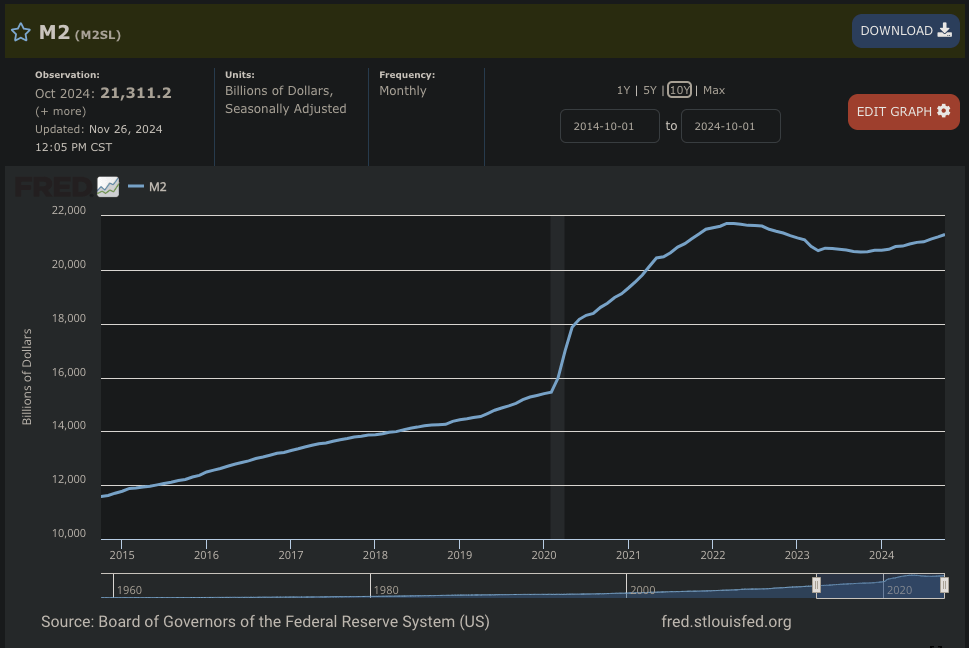
    A $1.9 trillion stimulus even as the country was already reopening. A trillion for infrastructure. And $400 billion for an “Inflation Reduction Act.”

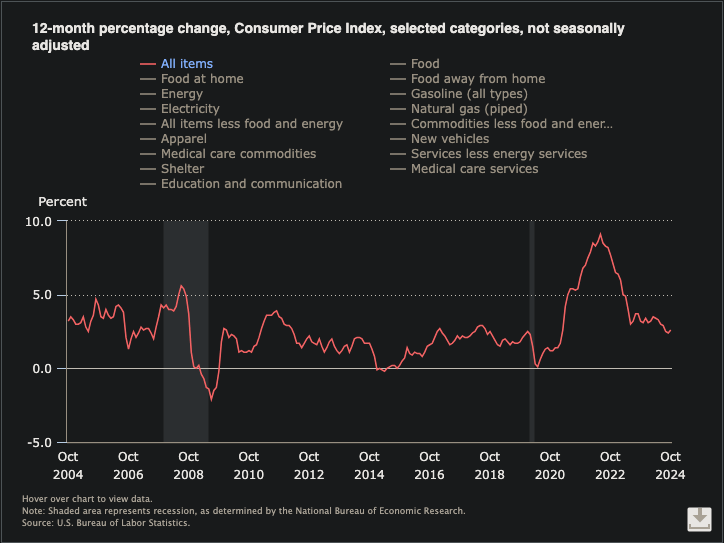
    Since when does pumping massive amounts of money into the economy reduce inflation?

    It certainly hasn’t at my grocery store. Prices are through the roof there, along with everywhere else.

    I’m lucky. I have more than most. So for me, inflation is just an annoyance.

    But for many Americans, it’s existential.

    Keeping Us Safe

    Sacks also emphasized the need to bring the war in Ukraine to an end.

    America has spent over $100 billion and counting on this war. Whatever the merits of Ukraine’s position, no war can go on forever.

    What’s more, continuously escalating a conflict with Russia is incredibly dangerous. As Sacks puts it:

    “…the world looks on in horror as Joe Biden’s demented policy takes us to the brink of World War III.”

    Where I Disagree with Sacks

    Sacks is right that Biden spends way too much money. But he lets the GOP off the hook too easily — they’re spendy spenders as well.

    In fact, wasting taxpayer money seems to be the one thing both parties agree on.

    Every dollar we add to the debt puts our country at greater risk. I haven’t seen a detailed plan from Trump on how he’ll reduce the national debt.

    Wrap-Up

    Overall, I thought Sacks did a great job at the RNC this week.

    Too often, folks in our industry have shied away from politics. We can see the results in the cities where technologists cluster, places like SF and New York. They’re filled with disorder, drugs and crime.

    We just don’t have the luxury of staying out of the fray anymore.

    In 2020, I voted for Biden. I’ve come to regret it, big time.

    This time, I don’t plan to vote for Biden or Trump. I’ll be writing someone in. I’m sick of picking between the lesser of two evils. And here in New Jersey, the outcome is a foregone conclusion anyhow.

    That said, Sacks makes a powerful argument. And he does it with the flair we’ve come to expect on All-In.

    What did Sacks get right? Where do you disagree?

    More from the blog:

    114 Days

    The Coming M&A Wave

    Nuclear War: A Scenario

    Save Money on Stuff I Use:

    Fundrise

    This platform lets me diversify my real estate investments so I’m not too exposed to any one market. I’ve invested since 2018 with great returns.

    More on Fundrise in this post.

    If you decide to invest in Fundrise, you can use this link to get $100 in free bonus shares!

    Misfits Market

    I’ve used Misfits for years, and it never disappoints! Every fruit and vegetable is organic, super fresh, and packed with flavor!

    I wrote a detailed review of Misfits here.

    Use this link to sign up and you’ll save $15 on your first order. 

  • I’d like to see every startup I invest in get to IPO. But realistically, an acquisition is the best case outcome for most.

    If Trump wins in November, we could see a massive wave of M&A in tech. This M&A flood will put a lot of money in investors’ pockets, whatever their political leanings may be.

    Pent-Up Demand

    Since Biden became president, tech companies have had a pretty hard time buying anything.

    The hardline FTC chair, Lina Khan, has blocked most acquisitions in tech. The FTC was even against Amazon buying the Roomba vacuum company!

    This means that for almost 4 years, tech companies haven’t been able to buy the products and teams they want. If a friendlier administration takes office in January, there will be enormous pent-up demand for M&A.

    Big companies like Uber are growing revenue 20% a year. Meanwhile, headcount has been basically flat since 2021.

    Growing revenue and flat headcount means tech giants are piling up cash. Big tech wants to use that cash to grow their businesses.

    An easy way to do that is to buy some startups! Uber could buy Gopuff and offer 15 minute delivery to Uber’s 150 million users overnight.

    Praying for Exits

    It’s really hard for VC’s to raise money right now. I’ve heard some say it’s the worst since the dot com crash in 2000.

    With few IPO’s and M&A blocked by the government, there have been very few exits since 2021. This means LP’s just don’t have the money to invest in the next venture fund.

    If a friendly administration comes in and M&A starts cooking, that picture changes considerably.

    Once we see a couple big M&A transactions push through, LP’s will have more cash to play with. Many will re-invest that in another venture fund, hoping for more juicy returns.

    The European Gadflies

    Ahh, the Europeans. Love the croissants, don’t love the politics.

    The one problem with this rosy M&A story is Europe. Regulators in the EU and UK are rabidly anti-tech.

    They helped block the Adobe-Figma deal even though Figma doesn’t compete with Adobe. They also had a hand in squashing the Amazon-iRobot acquisition.

    You may see some tech companies pull out of the UK entirely to avoid regulation. For most companies, it’s not a significant market anyway.

    The EU is a tougher cookie. But acquirers may be able to spin off certain units or make commitments to share platform access with competitors. This worked for Google’s acquisition of Fitbit in 2020.

    Wrap-Up

    For America’s system of entrepreneurship to work, people have to make a return on their investment. For the last 3 years, that’s been nigh impossible.

    If Trump wins, he’ll get rid of Lina Khan and M&A will get much easier. Cash-rich tech giants will go on a shopping spree.

    And hey, I’m willing to part with my shares — for a reasonable price.😁

    What do you think the future holds for M&A?

    More on tech:

    114 Days

    My Top 5 Pitch Deck Pet Peeves

    Retool’s YC Demo Day Pitch

    Save Money on Stuff I Use:

    Fundrise

    This platform lets me diversify my real estate investments so I’m not too exposed to any one market. I’ve invested since 2018 with great returns.

    More on Fundrise in this post.

    If you decide to invest in Fundrise, you can use this link to get $100 in free bonus shares!

    Misfits Market

    I’ve used Misfits for years, and it never disappoints! Every fruit and vegetable is organic, super fresh, and packed with flavor!

    I wrote a detailed review of Misfits here.

    Use this link to sign up and you’ll save $15 on your first order. 

  • My very best wishes to President Trump after the cowardly attempt on his life on Saturday. 🇺🇸

    He showed incredible presence of mind, ducking down instantly as shots rang out. And far from killing him, the would-be assassin didn’t even delay Trump’s schedule — he’s at the RNC today.

    He’s a tough old SOB, isn’t he?

    On Sunday afternoon, once it was clear President Trump was okay, I was sitting outside with my coffee. I got to thinking…what will the world look like after the election?

    We vote for president on Tuesday, November 5. By November 6th, we should know the winner.

    That’s 114 days from today.

    Heavy inflation and Biden’s pathetic debate performance meant Trump was already favored to win. Now, after the attempt on his life, a second term for Trump seems highly likely.

    Under Trump 2.0, I expect a major rally in markets. Here’s why…

    Lower Taxes

    Trump cut corporate and individual taxes in his first term. In a second term, he plans to cut taxes even more. The corporate rate could reach just 18%.

    Stocks exploded when Trump became president in 2017, in large part because of his tax cuts. Lower corporate taxes mean more profits for public companies.

    More money in the hands of individuals could also spur economic growth. That pushes up stocks.

    Firing Lina Khan

    If there’s one human being that those of us in the tech industry can’t stand, it’s Lina Khan. The FTC chair is blocking almost all acquisitions, even piddly ones like Amazon’s attempt to buy the Roomba vacuum guys!

    Lina Khan is anti-tech, anti-business, and anti-capitalism. So is the entire Biden administration.

    Getting these people out of government will be a huge positive for business.

    Public companies can get the people and tech they need by buying other companies, as they have for decades. VC’s can get desperately needed liquidity by selling startups to the bigger players.

    And it’s not just Lina Khan. The Biden administration looks for any opportunity to hit business with a stick. Trump, meanwhile, repealed numerous regulations in his first term and will surely axe many more in his second.

    Lower Interest Rates

    The odds of a cut in September are already high, given lower recent inflation readings.

    Trump doesn’t control this, nor can he take credit for it. But he will benefit from it.

    An environment of lower taxes, less regulation, and declining rates — that’s a great combination.

    Wrap-Up

    When we sit here 114 days from today, we could be looking at a new president-elect and a major market rally.

    You might be thinking, “Wow Francis, you sure are a big Trumper!”

    To tell you the truth, I’m not happy with either of the candidates. I think Trump is a better choice than Biden, but I’m actually planning to write someone in.

    Still, I can see which way the wind’s blowing. Trump is well on his way to a second term.

    And whatever his imperfections, business is going to love it.

    What do you think of the election?

    More from the blog:

    My Ten Year Angel Investing Plan

    Meet My Latest Investment: North

    Poor Charlie’s Almanack

    Save Money on Stuff I Use:

    Fundrise

    This platform lets me diversify my real estate investments so I’m not too exposed to any one market. I’ve invested since 2018 with great returns.

    More on Fundrise in this post.

    If you decide to invest in Fundrise, you can use this link to get $100 in free bonus shares!

    Misfits Market

    I’ve used Misfits for years, and it never disappoints! Every fruit and vegetable is organic, super fresh, and packed with flavor!

    I wrote a detailed review of Misfits here.

    Use this link to sign up and you’ll save $15 on your first order. 
  • I finished this book in 72 hours. It was terrifying.

    Nuclear War: A Scenario describes how a nuclear war could kill 5 billion people. It begins out of the blue on a spring afternoon.

    How Nuclear War Could Happen

    In this scenario, North Korea launches a single ICBM at Washington, D.C. We never find out why.

    Our radar identifies it immediately. Our missile defenses try over and over to shoot it down.

    They fail.

    A massive warhead hits DC, destroying it completely. Soon after, another hits a nuclear power plant in California. This causes a massive explosion, firestorm, and radiation release.

    America launches a massive counterattack at North Korea. But in the way of our missiles sits Russia.

    Russian radars are less advanced than ours. So, Russian leaders think those American missiles are aimed at them.

    Russia retaliates. It launches all its nuclear missiles at the United States.

    The United States, already reeling from multiple missile strikes, sees the Russian barrage on radar. We retaliate by launching everything we have.

    And just like that, the world ends.

    Most humans are killed. Those that remain go hungry in a nuclear winter.

    Even once the earth returns to normal, the small number of remaining humans have been set back to a prehistoric society.

    How Do We Prevent This?

    There’s nothing we can do that’s more important than preventing a nuclear war like this.

    But how in the hell do we do it? So far, I have only a couple ideas.

    Our “Launch on Warning” policy needs to go, right now. This policy says the US will launch nuclear weapons just based on seeing incoming nukes on radar.

    The problem is, radar can be wrong! We could wind up launching nukes because of an attack that never happened.

    We should also reduce the number of nuclear weapons in existence worldwide.

    We did this successfully in the SALT talks. We need to do it again.

    Fewer nukes means less potential destruction. It means the survival of our species.

    Being in the technology industry my entire career, I’d also like to see us help prevent nuclear war. I don’t know how to do that.

    Can we build better radar systems less prone to false alarms? Can we create new social media platforms that further understanding between peoples that hate each other?

    I don’t know what the right answer is. But we better find some, and fast.

    Looking Towards the Election

    I don’t get political on this blog much. But reading this book, I was struck by a thought.

    “I don’t want Biden or Trump making these decisions. I don’t respect them.”

    If there’s ever a nuclear crisis — God forbid — we need a levelheaded person with excellent judgment running things. Kennedy did it successfully during the Cuban Missile Crisis.

    But I don’t think these guys can.

    Biden in particular concerns me. He is clearly senile. How can he be trusted to make these decisions?

    Wrap-Up

    I wish I had a cheerier topic for you on a Friday. But this book really hit home with me, and I thought we needed to discuss it.

    I suggest you read it and give it some thought. We don’t like to think about these things, but we need to.

    As a world, we need to talk about how we can make nuclear war less likely. Nothing else we will do in our lifetimes matters more than this.

    Moreover, reading this book reminds me how fragile life is. Let’s enjoy each day, while we have the chance.

    What are your thoughts on preventing nuclear war?

    More on books:

    Freedom’s Forge

    Elon Musk (Part 1): Overcoming the Odds

    My Favorite Books of 2023

  • This morning, I opened a deck and said “Oh, no.” They had done the unthinkable: written a 44 slide deck.

    There are 5 pitch deck mistakes that cause the big vein in my forehead to bulge. I’ll tell you what they are, so you can avoid them.

    The Forbidden Five

    1) Too long. A deck should be a short, punchy summary of your company.

    Aim for 10-12 slides. You definitely don’t want 44 — and believe it or not, I’ve seen even longer ones than that.

    This morning, I looked at 22 decks in a row. Other investors are doing the same.

    We need to find out the basics on your startup and move on to the next. Please, make it easy for us — keep it brief!

    When your deck is too long, the odds go up that the investor says “Ahh!” and just closes it. You don’t want that to happen.

    2) Too much text. I’m squinting, I’m pulling my laptop closer to my face. And I still can’t read it.

    Decks do not lend themselves to large amounts of text. The slides become crowded and unreadable.

    Leave the narrative in the deal memo. Keep the deck simple.

    Each slide should be a single thought. Aim for a single sentence, phrase, or chart.

    Your ideas get lost when the slides aren’t legible.

    3) Fantasyland TAM’s. “Real estate is a $114 trillion industry!” Whenever I see something like that, I turn a sickly shade of green.

    Giant, fantasyland numbers mean nothing. And when you throw them around, it’s hard to take you seriously.

    Here’s how to do a proper TAM…

    Let’s say that the company in question is a prop tech SaaS startup. They sell a building management platform to property management companies.

    Their software costs $10,000 a year and there are around 50,000 potential customers. So, the TAM is $500 million.

    Keep your numbers rooted in reality. A smaller number with strong justification behind it is way more convincing than a huge figure plucked from nowhere.

    4) Advisors. Ick.

    Never include advisors in your slide deck. They will have little or no effect on your company. They’re just not relevant.

    When a startup puts advisors in the deck, it makes me think they don’t have anything more substantive to show.

    Keep the focus on the actual team, the product, and the customers.

    5) Word salad. Do not use any of these words: democratize, streamline, poised, line of sight, dynamic, or stakeholders.

    No jargon, ever! Instead, tell us in clear language what you do, why it matters, and how it’s going.

    Wrap-Up

    Founders, I love ya. You’re working hard and moving the world forward, bit by bit.

    That’s why I’m telling you this. I don’t want investors to pass on your company just because your deck is a mess.

    The good news is, these problems are easy to fix! Take a couple hours, sit down, and fix them!

    I guarantee you it will be worth it.

    What are your slide deck pet peeves?

    More on tech:

    Retool’s YC Demo Day Pitch

    Meet My Latest Investment: North

    How to Ace a 3 Minute Pitch

    Save Money on Stuff I Use:

    Fundrise

    This platform lets me diversify my real estate investments so I’m not too exposed to any one market. I’ve invested since 2018 with great returns.

    More on Fundrise in this post.

    If you decide to invest in Fundrise, you can use this link to get $100 in free bonus shares!

    Misfits Market

    I’ve used Misfits for years, and it never disappoints! Every fruit and vegetable is organic, super fresh, and packed with flavor!

    I wrote a detailed review of Misfits here.

    Use this link to sign up and you’ll save $15 on your first order. 

  • On September 1st 1939, Hitler attacked Poland. At the time, the US military was only about the size of Holland’s. Some of its weapons dated back to the Civil War.

    In less than 6 years, America went from having almost no military to winning WWII. This is the story of Freedom’s Forge.

    The Race to Rearm

    As Poland and France fell and Britain came under attack, President Roosevelt knew the US had to prepare for war. But who should lead the effort?

    FDR asked his contacts in industry. One name kept coming up: Bill Knudsen.

    “Big Bill” Knudsen was the president of General Motors. At GM, and earlier at Ford, he had set up the first systems of mass production.

    FDR asked him to do it again. The Danish immigrant immediately accepted, even though the government couldn’t offer him a salary.

    “This country has been good to me, and I want to pay it back.”

    Knudsen quickly put out weapons contracts to America’s leading manufacturers. GM built tanks, Ford airplanes.

    Before I read Freedom’s Forge, I always thought the government told companies what to make. But that’s not what happened.

    Knudsen merely told executives what he needed. And they put in bids.

    Most of these companies had never made weapons before. But they were experts in mass production.

    They puzzled over blueprints from the military, working backward until they had a product.

    Bit by bit, America’s free enterprise system ramped up.

    Winning the War

    Once America’s war industries began to produce, the output was staggering. By 1942, America was producing more arms than the entire Axis combined.

    Tank production reached 25,000, up from just a few hundred before the war. Planes, nearly 50,000. Factories also churned out an incredible 10 million rounds of small arms ammo.

    Some of these weapons went to our allies. Some rearmed our own forces.

    Knudsen and the administration did everything they could to remove barriers to production.

    They gave loans to manufacturers to help them convert to war production. Knudsen immersed himself in detail, making sure the right tools got to the right factories.

    Bit by bit, the tables began to turn.

    What I Learned

    Today, the business problems we face are much more prosaic. And I’m grateful for that.

    But the story of America’s rearmament shows how important it is to set crazy goals.

    Before the war, America made just a handful of new planes per year. By 1944, we produced nearly 100,000 a year.

    Almost everyone thought that growth like this was impossible. And yet, we’d need that many planes to win the war.

    So they buckled down and increased production, step by step. And sure enough, they did it.

    Freedom’s Forge also shows the value of hiring outsiders with the right expertise.

    Knudsen had 0 experience in armaments when he started. But he was an expert in mass production.

    Not knowing how the armaments industry usually worked was an advantage. Knudsen rejected traditional craftsman-style production in favor of assembly lines like those he built at GM.

    This let America produce weapons like never before.

    Wrap-Up

    Knudsen took a defenseless country and made us a military powerhouse. In him, I recognize some of the traits I see in the best startup founders today.

    He worked tirelessly for free. He knew the big picture, but immersed himself in the tiniest details as well. He came from outside the industry, but brought with him unique insights.

    In our more peaceful times, we still need Bill Knudsens. People who don’t care what’s impossible.

    People who will not be stopped.

    “All of us have a duty to perform in this world.”

    Bill Knudsen

    More on books:

    Poor Charlie’s Almanack

    My Favorite Books of 2023

    Elon Musk (Part 1): Overcoming the Odds

    Save Money on Stuff I Use:

    Fundrise

    This platform lets me diversify my real estate investments so I’m not too exposed to any one market. I’ve invested since 2018 with great returns.

    More on Fundrise in this post.

    If you decide to invest in Fundrise, you can use this link to get $100 in free bonus shares!

    Misfits Market

    I’ve used Misfits for years, and it never disappoints! Every fruit and vegetable is organic, super fresh, and packed with flavor!

    I wrote a detailed review of Misfits here.

    Use this link to sign up and you’ll save $15 on your first order. 
  • $3.2 billion. That’s the valuation Retool hit in just 5 years. Today, I watched their YC Demo Day pitch.

    Even on Demo Day, Retool was a clear winner.

    What Retool Does

    Retool makes it easy to build internal software tools using no-code. That lets companies build the tools they need quickly and cheaply.

    Founder David Hsu makes Retool’s value prop very clear.

    He shares a story of a customer who spent $200k and 6 months building a sales forecasting tool. Retool rebuilt it in 20 minutes on a sales call and closed the deal.

    Who wouldn’t want to give Retool some money and save 6 months of work?

    My Reaction

    A clear value proposition is one of the most important things I look for in a startup.

    If the founder can make it clear to me why his product is valuable, he can make it clear to customers. David does that beautifully.

    He also shows us that Retool is addressing a giant market.

    Internal tools are half of all code. If Retool can make that build fast and easy, that’s a huge opportunity.

    Retool’s product sounds incredible, and David shows us the traction to back it up. He’s already at $11k MRR.

    Most startups in an accelerator get to a couple thousand a month in revenue, if that. With traction like this, Retool was probably one of the strongest companies in the YC W17 batch.

    Would I Have Invested?

    I definitely would’ve tried to invest in this company. Strong traction, a killer value proposition, and builder founders make Retool a no brainer for me.

    The question is, could I have gotten an allocation?

    Retool pulled in a Who’s Who of Silicon Valley for its seed round. Elad Gil, Nat Friedman, and the Collisons were in, with Joe Montana coming along just for good measure.

    This was clearly a hot company at the time. Allocations were probably hard to get.

    That said, 2017 was not a feverish year in the market. I may have been able to wrangle a spot, especially if I met them early. That’s something I always aim to do with great companies!

    Even if I couldn’t have gotten a spot, Retool shows us the potential of meeting great startups early. Meet enough companies like Retool, and you’ll find a seat on one of these rocket ships sooner or later.

    And one is all it takes.

    Wrap-Up

    Retool’s pitch on Demo Day is as good as it gets.

    Unmistakable value prop, strong traction, big market, builder founders. Sign me up!

    Would you have invested in Retool?

    More on tech:

    Lattice’s YC Demo Day Pitch

    Meet My Latest Investment: North

    Show Me the Money!

    Save Money on Stuff I Use:

    Fundrise

    This platform lets me diversify my real estate investments so I’m not too exposed to any one market. I’ve invested since 2018 with great returns.

    More on Fundrise in this post.

    If you decide to invest in Fundrise, you can use this link to get $100 in free bonus shares!

    Misfits Market

    I’ve used Misfits for years, and it never disappoints! Every fruit and vegetable is organic, super fresh, and packed with flavor!

    I wrote a detailed review of Misfits here.

    Use this link to sign up and you’ll save $15 on your first order. 

  • Remember those story problems in math class where the choices are A, B, C, or D – Not Enough Information? Half the time I read a deck, I find myself choosing D.

    That means I’m moving on to the next. After all, there’s 20 pitches in my inbox!

    Here’s how to make sure this doesn’t happen to your company…

    The Details That Matter

    These are the key numbers you want to include:

    1) Current revenue. If you don’t tell me your revenue, I’m going to assume you don’t have any. And at that point, it probably doesn’t make sense to meet.

    If your revenue isn’t that much, don’t be ashamed! Be proud you have any at all! So many startups don’t.

    Here’s what a company that’s just getting started could say: “3 paying customers at $120/mo.” Nice and clear!

    2) Month by month revenue numbers.

    My pet peeve with decks and deal memos is not breaking out revenue monthly. Way too often, companies just put “$500k ARR” in the deck.

    That tells me practically nothing.

    Did you go from $100k to $500k ARR in the last year? Or did you go from $400k to $500k?

    Those are two very different companies on two very different trajectories.

    If your growth is strong, show it off! And if it’s not, there’s no point in hiding that fact — it’s going to come out in diligence anyway.

    Showing your growth trend helps everyone understand where your startup is at. That’s how we all best use our time.

    3) Monthly burn. Fast growth is great, but it’s only impressive if the burn stays reasonable.

    So tell me what you burned last month. If you’re capital efficient, here’s your time to show off!

    And if you’re not, hiding that fact won’t stop you from running out of cash.

    Wrap-Up

    Maybe you don’t want to put all these details in a deck or deal memo. You’re afraid to share information.

    That’s your prerogative. But keep in mind that if you don’t show investors enough to get them interested, you may not get a meeting.

    From what I’ve seen, the best founders are very open with information.

    They want everyone to have all the info they need. And they don’t want to waste the investor’s time, or their own.

    Give us enough info to get us excited! If you do that, your odds of getting a check go way up.

    What info do you include in your materials? Leave a comment and let us know!

    Great to be back!

    If you enjoyed this post, subscribe for more like this!

    More on tech:

    Lattice’s YC Demo Day Pitch

    Meet My Latest Investment: North

    How I Made My Founder Meetings Twice as Efficient

    Save Money on Stuff I Use:

    Fundrise

    This platform lets me diversify my real estate investments so I’m not too exposed to any one market. I’ve invested since 2018 with great returns.

    More on Fundrise in this post.

    If you decide to invest in Fundrise, you can use this link to get $100 in free bonus shares!

    Misfits Market

    I’ve used Misfits for years, and it never disappoints! Every fruit and vegetable is organic, super fresh, and packed with flavor!

    I wrote a detailed review of Misfits here.

    Use this link to sign up and you’ll save $15 on your first order. 

  • I kept having the same problem in my founder meetings. We’re 23 minutes into a 30 minute call. I have nine questions and I’ve only had a chance to ask two. Ahh!

    I was taking a walk recently, thinking of how I could fix this problem. Then, it came to me…

    Setting Expectations

    “Founders are doing this because they think I want a presentation,” I realized. “But that’s not actually what I’m looking for. I need to communicate better with them.”

    So now, I say this at the beginning of meetings:

    “I usually run these as a Q&A, back-and-forth, if that’s okay with you.”

    Simple phrase. Totally changes the meeting.

    We have more of a real conversation, with me lobbing questions at the founder and him shooting answers back at me. I easily get the information I want.

    Meetings that took 35-40 minutes are down to 20. And I actually know more about the startup than I would’ve from the longer meeting.

    Making Meetings More Efficient

    If your meetings go from 40 minutes to 20, that means you can do twice as many. And meeting a lot of founders is the name of the game.

    Take my latest investment, North. I had to look at around 150 companies and meet around 75 until I ran into Matt, the founder of North.

    It takes a lot of reps to find a great startup. Anything that can help us gather info more efficiently is a huge help.

    Different Investors, Different Styles

    Founders tend to spend the whole meeting presenting because that’s what a lot of investors want. I’m told that many say nothing throughout the pitch and just have a question or two at the end.

    So, it makes sense that founders have tailored their pitch to this format.

    I prefer Q&A because before we meet, I’ve already reviewed the deck and other materials. Now, I have a bunch of questions on team, sales strategy, product direction, etc.

    If you’re a founder, keep in mind that different investors have different styles. Ask at the beginning of a meeting whether the investor prefers to just hear a pitch or would rather do more Q&A.

    If you tailor the meeting to each investor, your odds of getting a check are a lot higher.

    Wrap-Up

    People think investing in startups is glamorous. The reality is, you do a LOT of Zooms. 🙂

    Those meetings can be pretty darn interesting. You see the future before most people do!

    But anything you can do to make them more efficient is huge. For me, telling founders the format I prefer has made learning about their startup dramatically easier.

    Whether you’re a founder or an investor, try setting expectations about how the meeting will work at the beginning. You’ll both get more out of your time together!

    How do your founder/investor meetings work?

    This will be the only blog for this week. I have some friends coming in from out of town!

    See you on Monday, July 8th!

    If you enjoyed this post, subscribe for more like this!

    More on tech:

    Meet My Latest Investment: North

    Lattice’s YC Demo Day Pitch
    Why Credentials are Overrated

    Save Money on Stuff I Use:

    Fundrise

    This platform lets me diversify my real estate investments so I’m not too exposed to any one market. I’ve invested since 2018 with great returns.

    More on Fundrise in this post.

    If you decide to invest in Fundrise, you can use this link to get $100 in free bonus shares!

    Misfits Market

    I’ve used Misfits for years, and it never disappoints! Every fruit and vegetable is organic, super fresh, and packed with flavor!

    I wrote a detailed review of Misfits here.

    Use this link to sign up and you’ll save $15 on your first order.