Tremendous

An angel investor's take on life and business

  • “Imagine a city with high rise blocks and parks laid out like a checkerboard. Every building would be across the street from a park.”

    Years ago, I told my friend Will about my zany plan for a city.

    “I’d live in Francisburg,” Will said.

    And ever since, the name stuck.

    I’ve had a plan for a city in my head for at least a decade. And since this blog is all about the future, I thought I’d share it with you.

    Tell me what you think! Am I crazy, or would you live in Francisburg too?

    The Plan for Francisburg

    At first, Francisburg would be small. We’ll start with 1 square mile, about the size of Hoboken, NJ or the West Village, two charming neighborhoods in my area.

    All of Francisburg would be laid out in blocks. Every block would have either buildings or a park.

    The blocks would be laid out in checkerboard fashion. Imagine the black squares with buildings and white squares with parks.

    At first, we’d only open 4 blocks for development. There would be no limits on building height.

    The limited land and easy zoning means that the blocks with buildings would be full of high rises. These high rises would be mixed use, making it easy to access everything you need from work to groceries to nightlife.

    Every 8 blocks, we’d have a Megapark. This would be 4 contiguous blocks of nothing but park.

    Over time, as the building blocks fill up, we’d release more to development.

    An Urban Planner Weighs In

    I recently met with the founder of a cool startup. And, miracle of miracles, he just happened to be an urban planner in his former life. I explained my idea for Francisburg.

    “Tell me why this is a terrible idea,” I said.

    “It’s not a terrible idea,” he replied. “This could go one of two ways. Barcelona actually has a superblock layout like this.”

    Ooh, one of my favorite cities. Go on…

    “But it’s also a lot like Le Corbusier, the high rise in a park. And that turned into housing projects.”

    Uh oh.

    “So the key is to make it mixed use,” he added.

    Mixed use is definitely the direction I’d go. I want to be able to get everything I need within a short walk, just like I do here in the NYC area.

    I would also add that housing projects are full of desperately poor people. Any such agglomeration would probably see some issues.

    Francisburg would be highly desirable. Who wouldn’t want to live in a beautiful new building surrounded by parks, right?

    Can You Get it Built?

    Can we actually get this thing built? Probably…

    To be useful, Francisburg can’t be in the middle of nowhere. I want it within 60 minutes commute of a major city.

    And it just so happens, there’s 3.75 square miles of land for sale just 51 minutes from downtown Austin, Texas.

    And what beautiful land it is! Gently rolling hills and pretty little trees and shrubs that could be incorporated into the park blocks.

    Best of all, it has almost no restrictions on development.

    Even if the price is high, the value of what you could build here would more than make up for it.

    Austin just might be the hottest city in America right now — who wouldn’t want to be in a beautiful new town nearby? Add in driverless Waymos, and that commute looks like a breeze.

    Wrap-Up

    I’d kill to see this city built! It’s absolutely doable and would be hugely profitable.

    I am in tech, not real estate. But if I ever see a project like this, I just might have to pick up and move.

    What do you think? Would you live in Francisburg?

    More on development:

    Apartments Are Banned from 76% of San Francisco

    YIMBY Is Working Wonders in New Zealand

    Why Manufactured Housing Won’t Fix High Housing Costs

    Save Money on Stuff I Use:

    Fundrise

    This platform lets me diversify my real estate investments so I’m not too exposed to any one market. I’ve invested since 2018 with great returns.

    More on Fundrise in this post.

    If you decide to invest in Fundrise, you can use this link to get $100 in free bonus shares!

    Misfits Market

    I’ve used Misfits for years, and it never disappoints! Every fruit and vegetable is organic, super fresh, and packed with flavor!

    I wrote a detailed review of Misfits here.

    Use this link to sign up and you’ll save $15 on your first order. 

  • For the last decade, dating apps have been the way to meet. But now, users are in decline and stocks are down. Are dating apps dead? And what will replace them?

    An Industry in Decline

    The number of active users for dating apps worldwide is down from 287 million in 2020 to 237 million in 2023. It’s showing in the stocks of dating app companies — some are down over 90%.

    Certain apps are faring better than others. Tinder, the crown jewel of Match Group and the largest dating app in the world, has stopped growing. Hinge however, also owned by Match Group, is up 48%.

    Why Aren’t People Swiping?

    People are exhausted by dating apps. They can be a lot of work — countless swipes, a smaller number of matches, a handful of those converting to dates, and most of those dates not working out.

    Women in particular are deleting the apps. 79% of women say they have no interest in using them in the future.

    Dating fatigue goes way beyond apps. More and more singles have given up on dating altogether. 50% of singles aren’t dating at all, according to a survey by Pew Research.

    Of all my unattached friends, not a single one of them dates, ever. Nor do they have any interest in doing so.

    They’re in their 30’s and early 40’s, and they’ve built lives they’re happy with. To them, dating sounds exhausting and pointless.

    My Experience With the Apps

    As a single guy, I use the apps myself. If you’re a man in the New York City area, it’s like drinking from a fire hose.

    In just the last couple days, I got 9 matches. My phone pings over and over with messages from different women, despite your humble blogger being thoroughly unremarkable. 😉

    Nearly all are attractive. Many are much younger than I. But I only have time to meet a tiny fraction of them.

    This surely leads to a frustrating experience for many girls. Even a very attractive girl may struggle to get a date, much less a relationship.

    There’s also the paradox of choice. Infinite options make it harder to choose anything.

    After all, who knows what else is out there?

    It doesn’t surprise me that Hinge is doing better than Tinder. Tinder is filled with women in Thailand and Kenya trying to meet Americans.

    Meanwhile, Hinge has women who actually live here. When friends ask me which app is best, I always go with Hinge.

    What’s Replacing Dating Apps

    So if the apps are dying, what will replace them? Increasingly, I think dating apps will be replaced by just not dating at all.

    I see it among my friends. It’s kind of startling to watch, but people withdrawing from dating altogether for many years is becoming commonplace.

    This may mean that people spend more time on social media or playing video games. Or perhaps they’ll put that energy into offline hobbies like hiking or camping.

    For those still looking for a date, in person is beating the apps.

    The NYC area is full of run clubs. Some seem to just run a block or so to a bar and hang out. But after years of pandemic isolation, I think that’s great!

    With people looking to connect more in person, it’s no wonder that apps for live events are doing well. Luma is suddenly everywhere, and I’m sure many more live event apps will follow.

    Wrap-Up

    I find dating apps give me what I want. But my opinion is increasingly a minority one.

    More folks are ditching the apps and joining a run club. And I think that’s great! Meeting in person is ideal.

    As an investor, I’m not the least bit excited about dating apps.

    It seems like a dying category. I want to invest in growing areas, not moribund ones.

    I think that in 10 years, we’ll see more people embracing the single life. Those that want to date will meet increasingly IRL.

    That sounds like a great future!

    Are you on the apps? If so, what has your experience been like? If not, why not?

    Have a great weekend, everyone!

    More on tech:

    I Tested Groq Voice

    How I Find the Best YC Companies
    Small Investors Lead to Big Investors

    Save Money on Stuff I Use:

    Fundrise

    This platform lets me diversify my real estate investments so I’m not too exposed to any one market. I’ve invested since 2018 with great returns.

    More on Fundrise in this post.

    If you decide to invest in Fundrise, you can use this link to get $100 in free bonus shares!

    Misfits Market

    I’ve used Misfits for years, and it never disappoints! Every fruit and vegetable is organic, super fresh, and packed with flavor!

    I wrote a detailed review of Misfits here.

    Use this link to sign up and you’ll save $15 on your first order. 
  • Imagine talking to an AI assistant and getting a response in milliseconds. It exists, and it’s called Groq. Today, I ran it through 3 tests.

    Groq (not to be confused with Elon’s Grok) creates special chips to power AI models. Groq’s claim to fame is ultra-fast inference (or question-answering). Groq answers questions 3-20x faster than other platforms.

    Voice plus instantaneous responses give us the opportunity to have a truly natural conversation with AI. Let’s give it a shot!

    Test #1: Finding Cheap Flights

    I’m planning a trip to Japan in the new year. I’ve been 6 times and speak the language conversationally, but I haven’t been back since Covid.

    I’m itching to spend some time in the wonderful nation that I consider my home away from home!

    The one problem with going to Japan is the flight. It’s long and expensive.

    Let’s see if Groq can help…

    Round trip flights for $450…can it be? These usually go for at least $1000.

    Alas, these cheap flights are a mirage.

    Groq doesn’t provide any link to purchase them. And when I ask for links, it can’t provide them.

    After this, I went to Google Flights to see if Groq was right. Nope, nothing below $800.

    These results weren’t helpful at all. I’m giving Groq an F on this one.

    Test #2: Chasing the Cherry Blossoms

    Despite having visited Japan many times, I’ve actually never seen the cherry blossoms! So, what time of year do they usually show up in Tokyo?

    Let’s ask Groq…

    Groq gave an excellent response with incredible speed. I would’ve liked to see a citation, but this is still a great result.

    I’ll give Groq an A- here.

    Test #3: Making My Meetings Better

    On to business…

    I have a couple meetings this afternoon. How can I make them more efficient and productive?

    Let’s see what Groq has to say…

    Groq’s response is great. Minimizing distractions is a key point I’ll definitely remember. I also like how it bolded the first few words in each idea, making it easier to read.

    I’ll give Groq an A on this one.

    Wrap-Up

    For a first effort, Groq Voice is pretty darn impressive. The speed is what wowed me most…it’s like talking to a super genius that can answer most any question instantly.

    Overall, I’ll give Groq a B for now. I’d like to see more accurate responses plus links to citations. That would give me the confidence to make Groq my primary LLM.

    Instant voice responses open up incredible opportunities for Groq.

    Imagine this integrated into smart glasses like the Meta Ray-Bans or a Figure robot. You could talk into the air and get any question answered instantly. Androids could navigate the world confidently, able to access any info they need in milliseconds.

    Congrats to the Groq team. I can’t wait to see what they do with this!

    Have you tried Groq?

    More on tech:

    The New Figure 02 — The World’s Best Robot?
    How I Find the Best YC Companies
    Small Investors Lead to Big Investors

    Save Money on Stuff I Use:

    Fundrise

    This platform lets me diversify my real estate investments so I’m not too exposed to any one market. I’ve invested since 2018 with great returns.

    More on Fundrise in this post.

    If you decide to invest in Fundrise, you can use this link to get $100 in free bonus shares!

    Misfits Market

    I’ve used Misfits for years, and it never disappoints! Every fruit and vegetable is organic, super fresh, and packed with flavor!

    I wrote a detailed review of Misfits here.

    Use this link to sign up and you’ll save $15 on your first order. 
  • There are 247 startups in the YC S24 batch. You’re probably not going to meet them all. So how can you find the best ones?

    I look at every single startup, meet around 10-20% of them, and invest in perhaps one. Here’s how I do it…

    The Directory is Your Friend!

    YC produces a wonderful tool: the YC Startup Directory. It contains details on every single YC company, from Airbnb to the latest batch.

    Here’s how I use it to find great new startups:

    1. Choose the current batch (S24 is the current one)
    2. Sort by “Launch Date” instead of “Default.” Then, I can see each new startup as its product launches. If they’re pre-launch, they’re too early for me to meet with.
    3. Look at each page, see what looks interesting. What’s novel? What’s new?
    4. Contact the founders. Their LinkedIn is on the right hand side of the page.
    5. Set up meetings. The directory page is a great way to prep for these meetings. It’s almost like a mini-deal memo.

    What I’m Looking For

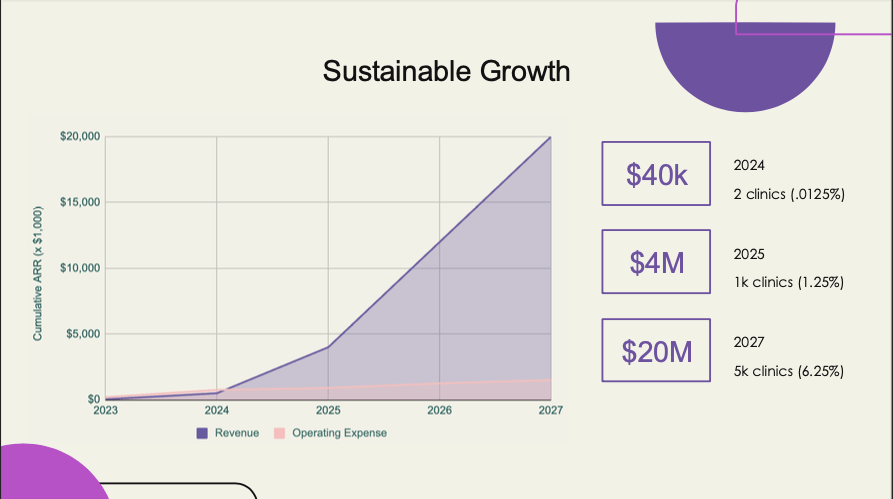
    I look for companies with $200-500k of live ARR. Very few YC companies have this, but some do.

    Those are the folks I’m looking for! If you see a company with $100-300k ARR while still in YC, that’s one of the strongest in their batch.

    A more typical YC startup might have a couple thousand a month in revenue, at best. A weaker one might not have any.

    The Gift That Keeps on Giving

    Yesterday, I met a YC company with an incredible product. The founders had great experience and were highly technical.

    But they only had a couple thousand a month in live MRR. This is a good start, but too early for me.

    So, I made a note to follow up with them next summer. By that point, they’ll probably be raising again.

    Startups are always raising money. Always. Don’t feel like you have to invest now.

    In a year or so, you’ll probably be able to invest again at the same price with a lot more traction! In fact, I’ve invested in 3 different YC companies this way in recent years.

    Why Demo Day Is Too Late

    I start contacting YC companies as soon as possible. I never wait until Demo Day.

    In some cases, I already knew the founders before they applied to YC. I may be one of the first people to hear about their admittance, and I make sure to set a meeting with them.

    Otherwise, I watch the YC directory like a hawk. Whenever an interesting new startup launches, there I am. 🙂

    But why not just wait for Demo Day?

    The best startups fill their funding round before Demo Day. If you wait until the herd sees them, you won’t be able to get into that round.

    Wrap-Up

    Investors love to complain about YC. “Wahhh, the valuations are too high, I want my mommy!”

    Boo hoo.

    They sorted through thousands of companies and picked the best ones. Then they funded them and gave them the best coaching on the planet.

    The deal is friggin’ gift wrapped for you. And you want that at a $8M post?

    I think YC is a wonderful part of startupland. Indeed, it’s hard to imagine a world without it.

    Now, back to trolling the directory!

    What do you think of YC?

    More on tech:

    Take This Out of Your Pitch Now

    Small Investors Lead to Big Investors

    Charge More!

    Save Money on Stuff I Use:

    Fundrise

    This platform lets me diversify my real estate investments so I’m not too exposed to any one market. I’ve invested since 2018 with great returns.

    More on Fundrise in this post.

    If you decide to invest in Fundrise, you can use this link to get $100 in free bonus shares!

    Misfits Market

    I’ve used Misfits for years, and it never disappoints! Every fruit and vegetable is organic, super fresh, and packed with flavor!

    I wrote a detailed review of Misfits here.

    Use this link to sign up and you’ll save $15 on your first order. 

  • “Let me tell you how we got here…” This is the most useless part of a startup’s pitch. But you’d be amazed how many founders spend a ton of time on it!

    “Well, we started with furniture sales, then we pivoted to eVTOL sandwich delivery. But the FAA shut us down, so now we’re a B2B SaaS for accountants.” I’m left scratching my head.

    It’s Not Relevant

    Unless someone asks, you never need to explain how your company got to where it is today.

    Where you’ve been doesn’t matter. It’s where you are now that counts.

    Talking about prior iterations of your company risks losing your audience.

    “What do I care about the platform you scrapped last year?” they’ll be thinking. And once you lose your audience, it’s hard to get them back.

    It Takes Too Much Time

    Startup pitch meetings are usually short. Mine average about 20 minutes.

    You only have so much time to show the investor that your company is special. Remember, you have to beat 200 other founders to get that check.

    If you only have 20 minutes, why spend 10 on something irrelevant that isn’t getting you closer to a check? That won’t leave enough time to talk about what really matters.

    What to Talk About Instead

    So what really does matter?

    Three things drive a company: team, product, and customers. If you’re not talking about those things, you’re wasting your precious time with the investor.

    Talk about why your team is the right one to tackle this problem. Show off your awesome product. Tell me who your customers are and why they love your product. Dig into details on revenue and sales strategy.

    If you cover all this, you won’t have time for anything irrelevant!

    Wrap Up

    Your time is precious. So is that of investors.

    Use it wisely. Don’t tell meandering, irrelevant stories.

    Your company’s history matters a lot to you. But to everyone else, I’m sorry, but it just doesn’t!

    Stick to what’s important: team, customers, and product. Save the rest for your diary.

    What do you talk about in pitch meetings?

    More on tech:

    How Important Are Co-Investors?
    Small Investors Lead to Big Investors

    Charge More!

    Save Money on Stuff I Use:

    Fundrise

    This platform lets me diversify my real estate investments so I’m not too exposed to any one market. I’ve invested since 2018 with great returns.

    More on Fundrise in this post.

    If you decide to invest in Fundrise, you can use this link to get $100 in free bonus shares!

    Misfits Market

    I’ve used Misfits for years, and it never disappoints! Every fruit and vegetable is organic, super fresh, and packed with flavor!

    I wrote a detailed review of Misfits here.

    Use this link to sign up and you’ll save $15 on your first order. 
  • “A lot of VC’s just want to give us money because we’re in YC. They don’t care about what we’re building.” That was a great founder I spoke with yesterday who’s currently in YC.

    It seems insane to me, but a lot of investors operate like this. Team, product, traction, who cares? The only question is, “Who else is investing?”

    That is a terrible approach. Let me tell you why…

    You Can’t Ask Sequoia for a Refund

    Let’s say Sequoia is in the seed round of a company you invest in. You couldn’t possibly get a stronger co-investor.

    Two years later, the company goes to zero.

    You can’t come to Sequoia and ask them for your money back. So you better make your own decision!

    One Data Point Among Many

    If a company went to YC or a top firm is leading their seed, that’s great. I don’t discount that information completely.

    But it’s just one data point among many. And there are others that are a lot more important.

    How good is this team? How fast are they growing? Those factors matter more than any co-investor.

    At seed, the big firms make very few investments anyway. I consider the lead more carefully at Series A, an area where the big funds are more active.

    When the Co-Investors Are a Little Too Good

    If a seed round is really star studded, I actually get a bit nervous. In my experience, early rounds filled with blue chip investors correlate with poor performance. Many top investors have said the same.

    How on earth could this be?

    Maybe if everyone thinks a startup will succeed, the future that startup is proposing is too easy to imagine. It’s not a radical enough departure from today.

    A startup has to bring about radical change in order to make big money. Think staying in strangers’ spare rooms on Airbnb, something I never would’ve done in 1,000 years otherwise.

    A Peak Inside My Portfolio

    Let’s take a look at the most successful companies in my portfolio so far. How good were the co-investors?

    1. $17 million ARR. Party round, lower tier accelerator, one prominent angel and the founder of a unicorn startup. Good co-investors, but it’s not exactly YC and Sequoia.
    2. $12 million ARR. A good early stage VC firm, a prominent angel, and a solid accelerator. Good co-investors, but doesn’t knock your socks off.
    3. $7 million ARR. Strong accelerator, no one else notable.
    4. $6 million ARR. One prominent angel, no one else notable.

    What you see here is that the really successful companies may have one or two good investors. But they don’t have a round filled with famous names. And none of these companies went to YC.

    One startup in my portfolio had a particularly star studded cap table. One of the best early stage funds in the world led its seed round.

    That company is about to go out of business. Out of 31 investments I have, it’s one of the 2 least successful.

    Go figure.

    Wrap-Up

    It’s easy to be wowed by YC, Sequoia, or whoever. But here’s my advice: take it as one data point among many, and make your own decision.

    We investors have one mission: turn a dollar into two. If we back strong teams with great products, we can do it.

    The rest is noise.

    How much value do you place on co-investors?

    There will be no blog on Monday for Labor Day. Have a great holiday weekend, everyone!

    More on tech:

    Small Investors Lead to Big Investors

    Charge More!

    What Happens in an Acquihire?

    Save Money on Stuff I Use:

    Fundrise

    This platform lets me diversify my real estate investments so I’m not too exposed to any one market. I’ve invested since 2018 with great returns.

    More on Fundrise in this post.

    If you decide to invest in Fundrise, you can use this link to get $100 in free bonus shares!

    Misfits Market

    I’ve used Misfits for years, and it never disappoints! Every fruit and vegetable is organic, super fresh, and packed with flavor!

    I wrote a detailed review of Misfits here.

    Use this link to sign up and you’ll save $15 on your first order. 

  • You’re not charging enough for your product. Charging too little, or nothing at all, is the most common mistake I see founders make.

    Why do founders do this? And how much should you charge? Let me break it down…

    A Common Problem

    I cannot tell you how many founders I meet that have an awesome product but charge little or nothing for it.

    They have 1000 excuses. “We need to make the product better first.” Or the classic, “We just want to get our foot in the door.”

    The bottom line is this is a business. If you’re providing value to someone, you should capture some of that value.

    We are not doing charity work here.

    This problem is especially common among female founders, from what I’ve seen. Perhaps influenced by our gender mores, they are often reluctant to put value on what they’ve created.

    How Much to Charge

    When founders do charge, the price is often absurdly low. A product that saves a white collar worker 20 hours a month might cost $20/month.

    That worker’s total comp including benefits is probably $75/hour. This means you created $1500 worth of value ($75 x 20).

    And you’re only charging $20?

    Here’s a rule to determine what to charge: charge at least 10% of the value you create. In this example, you would charge $150/mo.

    Some products help you make more money, rather than save you time. In that case, the same math applies.

    Let’s say a product boosts my sales from $10,000 a month to $20,000. You want to charge at least $1,000 a month for that.

    This 10% rule of thumb is a floor, not a ceiling. Keep upping the price for new customers until you get serious resistance!

    Charging based on value creation works for B2B and B2C. Some B2C companies rely on ads, but this only works at enormous scale — see Facebook, Instagram, etc.

    Finding Out Who Your Customers Are

    People value what they pay for. If someone isn’t willing to pay you for your product, they’re not the customer you’re looking for.

    The people who will pay are getting the most value from your product. They will be the most engaged users.

    That’s who you want to build for!

    Don’t let cheapskates send you off on wild goose chases building X, Y and Z. Those features might be useless to your real customers!

    Instead, build for the folks who are most engaged — the folks who are paying.

    Building a Sustainable Business

    Every business has to make money. Otherwise, you’re dependent on fundraising.

    Fundraising is harder these days. And it’s especially hard for startups with little or no revenue.

    Your company exists to accomplish an important mission. But you can’t do that without money coming in the door.

    So you have to charge, and you have to charge commensurate with the value you create. That’s the only path to success.

    Wrap-Up

    My grandpa used to run a machine repair shop. He did wonderful work, but he charged practically nothing. And he never pushed customers to pay past due bills.

    One day, my grandma took him aside and said, “Jim, you’re not being fair to yourself.” She was right.

    Be fair to yourself. Don’t be afraid to put value on what you’ve built.

    Have you struggled with pricing your product?

    More on tech:

    Small Investors Lead to Big Investors

    What Happens in an Acquihire?

    Why I Only Invest in a Handful of Countries

    Save Money on Stuff I Use:

    Fundrise

    This platform lets me diversify my real estate investments so I’m not too exposed to any one market. I’ve invested since 2018 with great returns.

    More on Fundrise in this post.

    If you decide to invest in Fundrise, you can use this link to get $100 in free bonus shares!

    Misfits Market

    I’ve used Misfits for years, and it never disappoints! Every fruit and vegetable is organic, super fresh, and packed with flavor!

    I wrote a detailed review of Misfits here.

    Use this link to sign up and you’ll save $15 on your first order. 
  • Two million people in the Philippines work in call centers. Soon, they may be replaced by AI.

    AI has impacted call centers more than just about any sector of the economy so far. AI systems are already answering most inquiries at some major companies.

    How long until these workers will be out of a job?

    The AI Wave

    There are few countries more dependent on call centers than the Philippines.

    At 2:00 am, Manila’s streets are full of workers on their “lunch break”. Huge sections of the population set their clocks to America.

    The call center industry has been good to the Philippines. Millions of workers have found higher wages and job security.

    But now, AI is threatening that progress.

    Call centers are rapidly installing AI systems. And the layoffs have already begun.

    AI could decimate the Philippines’ call center industry.

    Klarna already has an AI system answering 2/3rds of customer service inquiries. If that becomes the norm, call centers could be a thing of the past.

    Specializing for Superior Performance

    Today’s general purpose customer service bots are only the beginning. I’m meeting tons of startups that are building specialized agents that will outperform today’s generalist tools.

    I’ve seen products for car dealerships, dentist’s offices, and more. These products are attuned to the exact questions that come up in these businesses.

    That will allow them to blow away today’s AI bots. That means even more job losses in customer service.

    The Limitations of AI

    To replace humans, AI needs to do more than just answer questions. It needs to take actions.

    I need AI to rebook my flight, send me a new credit card when I lose mine, or close my account. This will require AI agents, not just chatbots.

    Today’s AI customer service tools mostly just answer questions. But tons of startups are building AI agents.

    I expect to see powerful agentic systems within the next couple of years.

    This leaves only the most extreme edge cases for humans to handle. Companies may keep 5-10% of their existing customer service staff to handle those.

    Wrap-Up

    AI is killing jobs in customer service. But it’s also creating new opportunities for workers in places like the Phillipines.

    Some are training AI models. Others are becoming virtual assistants. Many of these jobs pay better than customer service.

    For workers that improve their skills, AI is an opportunity. But those that don’t will soon be out of a job.

    What’s happening in the Philippines today will be happening in the US soon. As AI tools get better, more complex jobs in developed nations will be at risk.

    The best protection for workers is upping their skills.

    How do you think AI will affect jobs?

    More on tech:
    Small Investors Lead to Big Investors

    What Happens in an Acquihire?

    Why I Only Invest in a Handful of Countries

    Save Money on Stuff I Use:

    Fundrise

    This platform lets me diversify my real estate investments so I’m not too exposed to any one market. I’ve invested since 2018 with great returns.

    More on Fundrise in this post.

    If you decide to invest in Fundrise, you can use this link to get $100 in free bonus shares!

    Misfits Market

    I’ve used Misfits for years, and it never disappoints! Every fruit and vegetable is organic, super fresh, and packed with flavor!

    I wrote a detailed review of Misfits here.

    Use this link to sign up and you’ll save $15 on your first order. 

  • A while back, I met a really interesting fintech startup. Revenue was growing like crazy, 30% MoM. So why did I pass?

    Because I stick with what I know. The company was in Nigeria, and the market is just too unfamiliar.

    Like a lot of US investors, I only invest in a handful of countries: the US, Canada, the UK, Ireland, Australia and New Zealand. Out of 31 investments, only two are abroad, in London and Toronto.

    But why not just seize the best opportunities wherever they are? Let me explain…

    Languages I Can Speak

    I need to see a product in action before I invest. And it needs to be in a language I speak.

    You could have the best product ever. But if it’s in Hindi, I can’t understand what’s going on.

    This is why I stick to products that are in English. Investing is hard enough without a language barrier.

    Boots on the Ground

    I know people in NYC and SF. Good deals come to me early.

    The same isn’t true in Germany, Brazil or Kenya.

    The best companies in those countries will be picked off by investors who live there. I’ll get the scraps.

    Predictable Legal Environment

    Countries where I invest have a similar, common law framework. All are pretty friendly to startups, especially the US.

    Contrast that with Germany. Over there, it can take months and tens of thousands of euros just to get incorporated.

    That puts a German startup at a huge disadvantage.

    And if you think the German environment is unfamiliar, try India, China or the Ivory Coast.

    Political and Economic Stability

    The countries where I invest are all politically and economically stable. Unfortunately, much of the world isn’t.

    Let’s use Ethiopia as an example. I’m sure there are some incredible Ethiopian entrepreneurs. But good luck investing there.

    If we invest in Ethiopia and our customers are there, they’re paying us in the Ethiopian currency, the birr. The birr’s value has dropped by half in just the last month.

    Even if we make a fortune in birr, it won’t add up to much in dollars. Throw in the risk of war with Somalia, and the country is not investable.

    Tiptoeing Onto the Continent

    I’m wary of investing outside the markets I know best. But I’m also doing something a lot of American investors are doing right now: carefully tiptoeing onto the continent.

    Two of the most exciting startups I’ve seen this year were in the Netherlands and France.

    These countries have incredible AI talent. The products are in English and the customers are mostly in America anyhow.

    Best of all, the valuations are a lot more reasonable than in the US.

    I haven’t made any investments on the continent yet. But later this year, I probably will.

    Even then, they’ll need to incorporate as a Delaware C Corp. Predictability matters.

    Wrap-Up

    Making money investing in startups is really hard. Even if we stick to our own backyard, the odds suck.

    Add in unfamiliar markets, unstable currencies or shaky governments, and the difficult becomes nearly impossible.

    So I’m sticking to what I know: a handful of developed, Western markets. There’s more than enough here to keep me busy.

    Where do you invest?

    More on tech:

    Small Investors Lead to Big Investors

    What Happens in an Acquihire?

    When Co-Founders Divorce

    Save Money on Stuff I Use:

    Fundrise

    This platform lets me diversify my real estate investments so I’m not too exposed to any one market. I’ve invested since 2018 with great returns.

    More on Fundrise in this post.

    If you decide to invest in Fundrise, you can use this link to get $100 in free bonus shares!

    Misfits Market

    I’ve used Misfits for years, and it never disappoints! Every fruit and vegetable is organic, super fresh, and packed with flavor!

    I wrote a detailed review of Misfits here.

    Use this link to sign up and you’ll save $15 on your first order. 
  • Kamala Harris has announced a plan to tax unrealized capital gains. This bizarre and unprecedented plan will hit the US economy like a sledgehammer.

    How It Works

    Harris plans to tax unrealized capital gains at 25%. This would only apply to tax payers with assets of over $100 million — for now.

    If you’re illiquid and can’t pay the tax today, you can defer it. But then you’ll have to pay an even higher rate.

    Expect this tax to affect a lot more people over time. When income taxes were introduced in 1913, they covered only the ultra-rich.

    Why It’s Unworkable

    Let’s say you own a building. You picked a good location, and the value goes from $100 million to $150 million.

    You now owe $12.5 million in tax, or 25% of $50 million. But you didn’t sell the building, so you don’t have the money to pay the tax!

    Looks like you’ll have to defer. But what happens if you sell the building and you can only get $95 million for it?

    No one seems to know.

    Startup founders will face the same problem. A founder could be worth $200 million on paper but have almost no liquid assets.

    Under Kamala’s regime, he’d be piling up giant tax bills on money he does not have.

    But it gets worse. How do we even know what these private assets are worth?

    Well, unless you have a financing event that prices them, the government will just pick a valuation. That valuation will determine how much tax you owe.

    Those valuations may have nothing to do with reality. After all, the government will want to maximize its revenue.

    Business Grinds to a Halt

    If there’s one thing that kills business, it’s uncertainty. And this Rube Goldberg tax plan is loaded with it.

    How much are my private assets really worth? And with all the complex rules, how much am I really supposed to pay?

    Businesses won’t know what to do. So business activity will slow down.

    Meanwhile, the tax will suck money out of the economy. That means less money to build housing or start a business.

    The tax may fall on the rich to start. But when we slide into recession and unemployment spikes, this cockamamie tax plan will affect everyone.

    Unstable Government Finances, Shrinking Capital Markets

    Let’s say that I have $200 million in stocks. In 2025, their value goes up to $300 million.

    I owe $25 million in tax, and I pay it. But in 2026, the market takes a nosedive.

    Now my stocks are only worth $150 million, less than when I started. Is the government going to give me a refund?

    Providing refunds would place enormous stress on the government during recessions. But if it doesn’t provide refunds, the government will starve the economy of capital.

    When the feds take a piece of your winnings but never share the losses, sooner or later you have nothing left.

    Hello, Dubai!

    Facing punitive taxation and a weak economy, Americans will begin to move abroad. After all, Dubai has no capital gains tax at all.

    Investors and entrepreneurs are the most mobile people in America. They’ll be the first ones off the sinking ship.

    Average Americans will stay. But they’ll face an economy starved of investment.

    Expect fewer jobs, lower pay, and little or no growth.

    Wrap Up

    Harris’ tax plan is insane. It will starve the economy of the money it needs to grow.

    Kamala Harris’ America is a very different country. It’s a place of low growth, minimal innovation, and high unemployment.

    It’s a place that anyone with options will leave.

    We already pay enough. Let’s get the government’s hand out of our pockets.

    What do you think of Harris’ tax plan?

    More on the election:

    Kamala’s Price Controls = Empty Shelves

    Kamala’s Extreme Agenda

    Sacks at the RNC

    Save Money on Stuff I Use:

    Fundrise

    This platform lets me diversify my real estate investments so I’m not too exposed to any one market. I’ve invested since 2018 with great returns.

    More on Fundrise in this post.

    If you decide to invest in Fundrise, you can use this link to get $100 in free bonus shares!

    Misfits Market

    I’ve used Misfits for years, and it never disappoints! Every fruit and vegetable is organic, super fresh, and packed with flavor!

    I wrote a detailed review of Misfits here.

    Use this link to sign up and you’ll save $15 on your first order.