Tremendous

An angel investor's take on life and business

  • Anthropic just dropped its most powerful model yet, Claude 3.7 Sonnet. This morning, I asked it 3 questions I actually needed the answer to. Let’s see how it does…

    Teach Me About Biology

    Lately, I’ve been fascinated by new developments in biotech. So I had Claude give me a primer on some recent discoveries.

    Here’s the prompt I used:

    “Please give me a primer on discoveries in biology and biotech in the 21st century. Gear your response to the layman, not a specialist. Focus in particular on developments like CRISPR, single cell gene sequencing, and synthetic biology. But also include anything else that seems relevant. Give me an output using bullet points so it’s easier to read.”

    Yes, I say please. You never know, these things could take over some day.

    Claude gives a great response, providing understandable info on CRISPR, single-cell genomics and more.

    It also formatted the answer beautifully, with bold headings and bullet points. That makes the response a lot easier to read.

    The response is great, but it’s hard to trust it. It doesn’t cite any sources.

    Overall, I’d give this a B. It’s great information, but if we don’t know where the info is coming from, it’s not that useful.

    On to question two…

    Learning About the AfD

    Lately, the AfD party is all over the news. They took 2nd place in the German election Sunday.

    But despite all the headlines, I don’t actually know much about what the AfD stands for. So I asked Claude:

    “Tell me about the political positions and past actions of the German AfD party. Please be specific and cite your sources.”

    Claude gave a good and thorough response. But even though I specifically directed it to cite its sources, it did not do so, saying “I don’t have web browsing capabilities.”

    Just like in my first test, the info looks great. But I have no way to verify it.

    So, the response is not that useful. I’d give this a B-.

    Out of curiosity, I ran this prompt through Grok 3.

    It cited 27 sources in a matter of seconds. It provided both links and in-line citations.

    Now that’s a good response!

    Government Debt Across Major Countries

    America’s debt is getting to a crushing level, $36 trillion. But I’m curious…how bad off are we compared to other major countries?

    So, I asked Claude…

    “Please give me a table with data for all major economies worldwide. In the table, put the country’s name, its level of government debt in dollars, and it’s debt/GDP ratio (expressed as a percentage). Cite sources whenever possible.”

    Claude produced a pretty table with just the info I wanted.

    But for some reason, it popped the table up alongside its prior response on the AfD. This was rather jarring and isn’t a great interface for the user.

    And again, it doesn’t link to sources. But at least this time, it gave me an idea of where I could go to verify the information.

    I’ll give this one a B- as well.

    Wrap-Up

    How a model does at math competitions isn’t very relevant to me or most people. So rather than look at benchmarks, I test models by putting them through real world tasks.

    Claude did a great job of answering the questions. I also liked how it formatted the outputs. The responses were clear, readable, and nicely formatted. That makes the tool easier to use.

    But the big problem with 3.7 Sonnet is the lack of citations. How can I trust the information Claude is giving me?

    Until that gets fixed, 3.7 Sonnet is not that useful. Overall, I’m giving it a B-.

    Grok 3 is still my favorite model. If they want to dethrone Grok, Anthropic needs to step it up.

    More on tech:

    Using Grok 3 to Manage My Stock Portfolio

    How Good is Grok 3?

    ChatGPT Pro vs. Gemini Advanced vs. Grok vs. Claude

    Save Money on Stuff I Use:

    Fundrise

    This platform lets me diversify my real estate investments so I’m not too exposed to any one market. I’ve invested since 2018 with great returns.

    More on Fundrise in this post.

    If you decide to invest in Fundrise, you can use this link to get $100 in free bonus shares!

    Misfits Market

    I’ve used Misfits for years, and it never disappoints! Every fruit and vegetable is organic, super fresh, and packed with flavor!

    I wrote a detailed review of Misfits here.

    Use this link to sign up and you’ll save $15 on your first order. 
  • “During the 2019-23 period, I have used the words ‘mistake’ or ‘error’ 16 times in my letters to you. Many other huge companies have never used either word over that span.”

    Berkshire Hathaway turned in an incredible 2024, with operating earnings up 27%. But in his annual letter on Saturday, Warren Buffett was eager to admit the mistakes he’s made running Berkshire for the last 60 years.

    Making Mistakes

    Buffett describes mistakes in assessing businesses and also in assessing people. He admits those mistakes, but doesn’t dwell on them.

    For the last week, I’ve been kicking myself for passing on the Figure seed round. The robotics startup is now raising at a $39.5 billion valuation.

    But if the greatest investor in history makes mistakes, I guess I’m entitled to a few as well! The key is to quickly admit them and learn from them.

    Buffett notes that in the end, the mistakes aren’t what matters most. It’s the occasional decision you actually get right:

    “And our experience is that a single winning decision can make a breathtaking difference over time.”

    Let’s think about this from a venture capital perspective.

    I could make 100 investments that don’t work out. And I could miss another 100 great companies.

    Heck, I probably will!

    But if I hit one Uber, this angel investing experiment is a huge success.

    Relying on People Smarter Than Us

    As ever, Buffett is self-effacing:

    “Lacking such assets as athletic excellence, a wonderful voice, medical or legal skills or, for that matter, any special talents, I have had to rely on equities throughout my life. In effect, I have depended on the success of American businesses and I will continue to do so.”

    I’m no Warren, but I can relate to what he’s saying. Most of the founders I meet are far more impressive people than I.

    Often, I don’t even fully understand what they’re doing. But I understand enough to say, “That guy is very smart and hardworking. Give him money.”

    And that’s all it takes. This is the magic of our capitalist system. We can hitch ourselves to someone else’s success, helping very modestly but profiting enormously.

    The Value of Patience

    “Often, nothing looks compelling; very infrequently we find ourselves knee-deep in opportunities.”

    Buffett is fine with sitting on his hands for an extended period. He only acts when he sees a really compelling investment.

    I try to do the same in my angel investing. Sometimes, I go months without making a new investment.

    Indeed, I haven’t made one yet this year.

    At other points, I make several investments in a matter of a few weeks. It really depends on what I see.

    The key is not to get antsy. There’s no need to write a check just because I haven’t written one in a while.

    It’s better to wait for that incredible opportunity. When it comes, I try to act decisively.

    Being patient isn’t easy.

    After all, we’re investors. We’re supposed to invest, right?

    Yes, we are. But activity for activity’s sake is not going to make us money.

    Wrap-Up

    No matter what you invest in, whether you’re a huge institution or a small fry like me, you can always learn from Buffett. Whenever I don’t know what to do, I go back to Warren’s letters.

    He’s patient, he thinks for himself, and he owns his mistakes.

    Those traits make a great investor. They also make a great person.

    More on investing:

    Missing Figure

    Using Grok 3 to Manage My Stock Portfolio

    US Stocks Are Extremely Overvalued

    Save Money on Stuff I Use:

    Fundrise

    This platform lets me diversify my real estate investments so I’m not too exposed to any one market. I’ve invested since 2018 with great returns.

    More on Fundrise in this post.

    If you decide to invest in Fundrise, you can use this link to get $100 in free bonus shares!

    Misfits Market

    I’ve used Misfits for years, and it never disappoints! Every fruit and vegetable is organic, super fresh, and packed with flavor!

    I wrote a detailed review of Misfits here.

    Use this link to sign up and you’ll save $15 on your first order. 
  • Note: This is not investment advice.

    I’m using Grok 3 to help manage my stock portfolio. It had some great insights that are going to make me a lot of money.

    Let me show you what I did and how you can use Grok to help you with your investments too…

    Pre-Grok Allocation

    Lately, I’ve been thinking about my asset allocation. Here’s the rather odd set-up I have now:

    • 50% VFIAX – Vanguard S&P 500 Index Fund
    • 25% VHYAX – Vanguard High Dividend Yield Index Fund
    • 25% VTIAX – Vanguard Total International Stock Index Fund

    The part I’ve been really questioning lately is the VHYAX.

    I bought it about 3 years ago. The idea was to provide stability and income in the portfolio. So, a fund full of dividend paying blue chips made some sense.

    VHYAX replaced a long-term Treasury index fund I owned before this. Seeing that rates were likely to go up around the end of 2021, I knew those bonds would get killed.

    So I sold them all at the end of 2021 and beginning of 2022, just averting some big losses. I replaced those bonds with VHYAX.

    VHYAX is better than what I had. But is it optimal?

    Grok’s Recommendation — US and Foreign Stocks

    These last few months, I’ve been wondering why I have this “stability and income” portion at all. Why not lean into long term growth?

    I’m 39 years old with a high risk tolerance. My biggest goal is to grow my capital.

    If I take some losses along the way, that’s fine. My lifestyle is fairly simple and I can weather it.

    So with that in mind, I turned to Grok 3. Here’s the prompt I used:

    “Assume I have a portfolio of index funds. My goal with this portfolio is long term growth. How should I allocate this portfolio across different types of index funds? Consider options like US index funds, foreign stock index funds, etc. I am 39 years old, so my time horizon is long. My risk tolerance is high. What would be the best allocation, given all this information? Use the best research you can find to support your answer.”

    Here’s what it came up with:

    Grok recommended a 60/40 US/Foreign split. This is in line with research from Vanguard which Grok linked me to in another query.

    I asked a bunch of follow-up questions, proposing a 65/35 US/Foreign split. After all, most of the innovative companies are here.

    Grok concluded that the performance difference between the two is likely to be minimal, so either way could work.

    65/35 it is!

    Grok Recommends Dumping the Dividend Payors

    I also asked about my VHYAX and whether it truly fit with my goal of long term growth.

    Grok confirmed my suspicions that VHYAX is working against me. The trade-off for those dividends is less long term capital appreciation.

    Grok quoted a difference of several percentage points a year between VHYAX and a regular stock index fund like VFIAX or VTSAX (Total Stock Market). I researched this on my own and confirmed that Grok is right.

    I then had Grok model the difference in returns over 30 years between a lower-returning VHYAX and a higher returning VFIAX or VTSAX. It’s huge — we’re talking millions of dollars.

    The performance disparity makes sense when you consider the portfolio composition of these funds.

    VFIAX is 31% tech stocks. VHYAX is just 11%.

    Long term, technology is what’s going to drive growth, in America and worldwide. To have such a small allocation to it is a huge drag on performance.

    To dump the VHYAX, I have to pay a little long term capital gains tax. But it sounds like this short term tax hit will be well worth it in the long run.

    Taking Action

    Based on my conversation with Grok and my own research, I took action to get this portfolio in better shape.

    I sold all the VHYAX. With the proceeds, I bought VTSAX and VTIAX. (VTSAX is a broader fund that’s slightly better than VFIAX. I didn’t sell my existing VFIAX because it would trigger a huge tax bill that doesn’t justify the tiny edge that VTSAX has.)

    Here’s what I have now:

    • 65% VFIAX/VTSAX
    • 35% VTIAX

    I’ll rebalance this yearly if the allocation gets off by at least 5 percentage points.

    This is an asset allocation I plan to keep for many years. I’m well positioned for long term growth, with exposure to both US and foreign markets.

    Getting the Most Out of Grok

    Your financial goals may be completely different from mine. But you can still use Grok to help you manage your money.

    The key is to give Grok lots of context.

    Tell it your age, your time horizon, and your risk tolerance. That way, it can give customized advice.

    Once Grok gives you its initial response, ask it lots of follow-up questions.

    Have it explain its recommendations. Ask it to run through various scenarios.

    You have an endlessly patient helper here — make use of it!

    Grok comes up with some great ideas, but it’s important to verify the facts it relies on. LLM’s are not perfect. Read the underlying research yourself.

    I did not find any hallucinations when I used Grok. But hallucinations are still a possibility.

    Finally, think for yourself!

    Grok is just there to advise you. Run the prompt through other models (I also used Gemini Deep Research). Take some time and just think.

    Consider Grok’s advice one input among several. In the end, the decision is yours.

    Wrap-Up

    I’m confident that this new asset allocation will give me a strong base for the future.

    Grok was incredibly helpful in providing advice and helping me game out scenarios. It’s like having a super smart analyst that you don’t have to pay, available 24/7.

    I encourage you to put this analyst to work! Have it run through your investments and find out how you could be making more money.

    But always use your own judgement. It’s a helper, not a boss.

    More from the blog:

    How Good is Grok 3?

    US Stocks Are Extremely Overvalued

    Missing Figure

    Save Money on Stuff I Use:

    Fundrise

    This platform lets me diversify my real estate investments so I’m not too exposed to any one market. I’ve invested since 2018 with great returns.

    More on Fundrise in this post.

    If you decide to invest in Fundrise, you can use this link to get $100 in free bonus shares!

    Misfits Market

    I’ve used Misfits for years, and it never disappoints! Every fruit and vegetable is organic, super fresh, and packed with flavor!

    I wrote a detailed review of Misfits here.

    Use this link to sign up and you’ll save $15 on your first order. 

  • Grok 3 is so good I just cancelled my Gemini Advanced subscription and set my homepage to Grok 3. Let’s run through 3 real world tests so I can show you what this model can do:

    1) Grok as Investment Analyst. Lately, I’ve been thinking about changing the asset allocation of my index funds. So, I thought I’d ask Grok for some ideas.

    I used Grok’s “Deep Search” capability on this one. Deep Search tells Grok to scour the internet for as much info as possible.

    Here’s the prompt I used:

    “Assume I have a portfolio of index funds. My goal with this portfolio is long term growth. How should I allocate this portfolio across different types of index funds? Consider options like US index funds, foreign stock index funds, etc. I am 39 years old, so my time horizon is long. My risk tolerance is high. What would be the best allocation, given all this information? Use the best research you can find to support your answer.”

    Grok gave an excellent and incredibly detailed response. It searched 40 different sites, looking at high quality info from Vanguard, Investopedia, and Finra among others.

    The response spanned several pages and included citations for key facts.

    I used this exact same prompt in Gemini Deep Research recently. The results were comparable, although Gemini suggested a more aggressive allocation (no bonds).

    The quality of Grok 3’s response was comparable to Gemini Deep Research. It also took much less time — maybe a minute versus around 5 minutes for Gemini.

    So, I just cancelled my subscription to Gemini Advanced and reset my homepage from Gemini to Grok.

    2) Find Me Some Startups! Since I spend my days meeting startups, I thought Grok could help me here too.

    I used Deep Search here also. Here’s the prompt:

    “What are the most interesting startups at pre-seed stage working on solutions to increase fertility? Consider startups to lower costs and improve effectiveness of IVF, and also startups to improve egg health for older women, among other possible ways to boost fertility.

    Please only show me startups that have raised $750,000 or less in funding.”

    Grok did a nice job here! It found me 5 fascinating startups from all over the world that are working on increasing fertility.

    The results weren’t perfect. Some of the startups it showed me had raised more than $750,000. But overall, the results were impressive.

    3) Optimizing My Meetings. Whenever I meet with a founder, I try to be as present as I can and learn as much as possible. But how can I improve my skills there?

    I asked Grok for some advice. Here’s the prompt I used:

    “As an angel investor, I meet with a lot of startup founders. I want to do the best job I can in those meetings. What are some tips to perform better, be more helpful, and learn more about the startups I meet with?”

    Grok’s advice was excellent. I especially like the part about watching the non-verbal cues. So often, our facial expressions and body language say even more than our words do.

    I asked some follow-up questions to Grok about evaluating those non-verbal cues. I want to get as good as possible at reading those so I can better understand the founders I meet.

    Wrap-Up

    Andrej Karpathy, co-founder of OpenAI, says Grok 3 is comparable to the best models out of OpenAI, including the $200/mo o1 pro.

    In my testing, Grok 3 is as good as any model I’ve used. It excels in research, crawling dozens of websites at warp speed and serving up detailed answers to your questions.

    It does all this faster than any model I’ve ever seen. And best of all, it’s currently free.

    I really encourage you to give Grok 3 a try. It’s incredible!

    More on tech:

    DeepSeek vs. Gemini Deep Research: Which Model Is King?

    ChatGPT Pro vs. Gemini Advanced vs. Grok vs. Claude

    Missing Figure

    Save Money on Stuff I Use:

    Fundrise

    This platform lets me diversify my real estate investments so I’m not too exposed to any one market. I’ve invested since 2018 with great returns.

    More on Fundrise in this post.

    If you decide to invest in Fundrise, you can use this link to get $100 in free bonus shares!

    Misfits Market

    I’ve used Misfits for years, and it never disappoints! Every fruit and vegetable is organic, super fresh, and packed with flavor!

    I wrote a detailed review of Misfits here.

    Use this link to sign up and you’ll save $15 on your first order. 
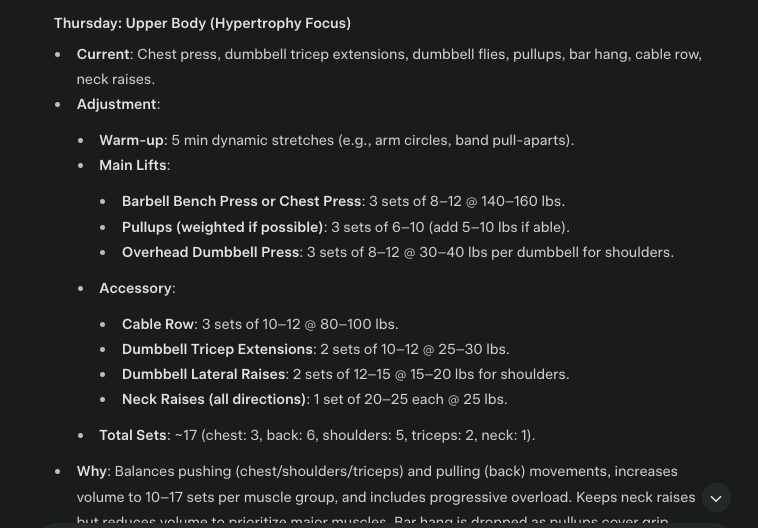
  • Paul Graham says your curiosity is the best way to tell what’s worth paying attention to. So when I scrolled through the YC directory this morning, I let curiosity lead me to the coolest startups.

    Since we dug into the W25 cohort two weeks ago, many more startups have launched their product. This morning, I looked at around 50 of them. Here are my favorites:

    Closure

    Crime has spiked in many of our big cities. And despite all the forensics and fibers and whatnot, homicide clearance rates are actually way down in recent decades.

    Lately, I’ve been looking for companies that are applying AI to help cops solve crimes. Using AI to crunch tons of surveillance video, witness reports, and other evidence could help nail criminals faster.

    Excellence Learning

    Lately, I’ve been using Gemini Live and ChatGPT Advanced Voice to tutor me. I’ve learned a lot about missile defense and plan to get a primer on CRISPR soon.

    You can stop the AI at any time and ask questions. It’s a wonderful way to learn.

    So I got to thinking…how can we apply this to K-12 education?

    Excellence Learning is making it happen. They combine structured AI tools for math and science with human tutors.

    I love that combo. An AI can practice with the students for as many hours as they need. Then, a human teacher can fill in gaps and help them stay motivated.

    Improve their kid’s grades and a parent will give you money. This could be a great business.

    Artificial Societies

    When a startup seems weird and hard to understand at first, that’s when I sit up and pay attention.

    Take Airbnb…you’re going to rent out strangers’ spare rooms? Pretty weird.

    But the weird ones produce the giant returns.

    So when I saw Artificial Societies, I was intrigued. These guys are using AI to simulate entire human societies.

    To start with, their helping people simulate how LinkedIn content will perform with their audience. Over time, they want to simulate all forms of group behavior. From their YC page:

    “Our vision is a world where all content, products, and policies are first simulated in an Artificial Society.”

    The human mind is the last frontier. If Artificial Societies can help us understand group behavior better, it will be an incredible achievement.

    Wrap-Up

    For me, scrolling through the YC directory is like being a kid in a candy store. “I want that one! Ooh, and that one!”

    I’ll be contacting each of these 3 companies today so I can learn more.

    I’m so grateful for awesome founders like these who are building ambitious things. And as much as we investors whine about the valuations sometimes, I’m grateful for YC.

    No one else supports new founders at this kind of scale.

    What are your favorite companies in W25?

    More on tech:

    The Coolest Startups from YC W25

    Missing Figure

    Meet My Latest Investment: Querio

    Save Money on Stuff I Use:

    Fundrise

    This platform lets me diversify my real estate investments so I’m not too exposed to any one market. I’ve invested since 2018 with great returns.

    More on Fundrise in this post.

    If you decide to invest in Fundrise, you can use this link to get $100 in free bonus shares!

    Misfits Market

    I’ve used Misfits for years, and it never disappoints! Every fruit and vegetable is organic, super fresh, and packed with flavor!

    I wrote a detailed review of Misfits here.

    Use this link to sign up and you’ll save $15 on your first order. 

  • “Aghhh, how could I have missed this?” That was me on Friday, reading the headline: Robotics Startup Figure AI in Talks for New Funding at $39.5 Billion Valuation.

    I had a chance to invest in Figure’s seed round in the spring of 2023 via a syndicate. I passed.

    Again in the spring of 2024, I had a chance to invest, this time in their Series B. Yet again, I passed.

    If that wasn’t bad enough, I had yet a third shot at this company recently. Some secondary shares came available via a syndicate. And yet again, I passed.

    This incredible company was right in front of me and I blew it. Not once but 3 times!

    I’ve been kicking myself all weekend.

    So how the heck did I make such a big mistake? Let me take you through my thought process at the time…

    What Was I Thinking?

    When I first saw Figure in the spring of 2023, I was entranced.

    I was so excited that I wrote about it on the blog. Since then, I’ve written about it 3 more times (one, two and three are linked here).

    Shortly thereafter, I had an opportunity to invest in the seed round.

    The founder, Brett Adcock, is incredible. His last company, Archer Aviation, is valued at $5.4 billion in the public markets.

    But the price of Figure’s seed was extremely high for that stage. So, I thought there would be no upside.

    At this time, the most valuable robotics company I could find was Boston Dynamics, at around $1 billion. Given the high price of Figure’s seed, I didn’t see much upside.

    What’s more, I have no background in robotics and didn’t feel qualified to invest in it. I’ve only done software up to this point.

    As for the other 2 opportunities to invest, the valuations were even higher. So, my concerns on upside were even more acute.

    What I Got Wrong

    What I didn’t realize was how big these robotics companies would get. Figure’s latest valuation is nearly 40 times that of Boston Dynamics.

    What changed?

    The ability to use Large Vision Models to direct a robot’s behavior lets them do way more than before. When I saw Figure’s seed round, no one had pulled it off yet.

    Still, something like ChatGPT shoved into a Figure robot wasn’t impossible to imagine. But I failed to appreciate just how much this would drive the upside.

    The fact that I wrote about the company over and over should’ve given me a sign: Francis, invest in this thing! As Paul Graham said:

    “Curiosity is the best guide. Your curiosity never lies, and it knows more than you do about what’s worth paying attention to.”

    And yes, I’m not really qualified to invest in robotics. But what the heck makes me qualified to do any of this?

    4 years ago, I knew nothing about angel investing. I learned by doing.

    Today, I’m planning on broadening out a bit and doing the occasional deep tech deal. In those deals, I’ll learn as I go, just like I have in the vanilla software deals I’ve done thus far.

    It all comes back to this quote from Naval Ravikant:

    “If I always did what I was qualified to do, I’d be pushing a broom somewhere.”

    How Much Would I Have Made?

    If I had gotten this right, I would be sitting on about $500,000 of paper gains on a $30,000 investment.

    I typically put $5,000 into a seed round and $25,000 into the Series A. After considering dilution and fees to the syndicates, that $30,000 would have increased in value to around $500,000. And it would’ve taken less than 2 years.

    So yeah, that stings.

    Does Figure’s Valuation Make Sense?

    Of course, that $500,000 would only exist on paper.

    Given the huge increase in valuation, I’d want to sell 25% of my shares in secondary at this point. It’s good for me to trim my position over time. But, with the shares locked up in a syndicate, it would only be possible if the syndicate lead agreed.

    Getting liquidity on that $500,000 would be tough.

    Figure would need to IPO or get bought at that price or higher. For that to happen, the price would need to make sense to public markets or an acquirer.

    Let’s give Figure a very generous 50x revenue multiple. At that level, they’d need $800 million a year in revenue to justify that valuation.

    I don’t know what these robots cost, but let’s assume the first ones are pricey. Say, $100,000 each.

    Figure would need to deploy 8,000 robots this year to justify their valuation under these assumptions. So far, all we have in terms of public information is that Figure is doing a pilot at one BMW plant in South Carolina. I don’t get the impression there are anywhere near 8,000 robots involved.

    Of course, there may be a lot more going on that isn’t public information. But based on what we do know, the price seems like a major stretch at this point.

    Figure may grow into the valuation. I really hope they do! I think the technology is absolutely awesome.

    Wrap-Up

    Getting so tantalizingly close to an incredible outcome is exciting. And blowing it gives me a sinking feeling in the pit of my stomach.

    Here is the most critical thing I learned from this mistake: If I have a chance to back a founder who had a billion dollar exit when he starts his next company, take it. Ask no further questions.

    I probably won’t understand what they’re doing. No big shocker there — these people are smarter than me.

    The price will be high. Again, surprise surprise! I’m paying for that track record.

    Just put a check into it. End of story.

    Mistakes are inevitable, especially in venture capital. The future is hard to predict.

    But I will not make this mistake again.

    More on tech:

    Meet My Latest Investment: Querio

    The Coolest Startups from YC W25

    I’m About to Close the World’s Tiniest Venture Fund

    Save Money on Stuff I Use:

    Fundrise

    This platform lets me diversify my real estate investments so I’m not too exposed to any one market. I’ve invested since 2018 with great returns.

    More on Fundrise in this post.

    If you decide to invest in Fundrise, you can use this link to get $100 in free bonus shares!

    Misfits Market

    I’ve used Misfits for years, and it never disappoints! Every fruit and vegetable is organic, super fresh, and packed with flavor!

    I wrote a detailed review of Misfits here.

    Use this link to sign up and you’ll save $15 on your first order. 

  • I once met a startup that was $700,000 in debt. Never do this.

    Angels and VC’s invest money to buy shares in a company. If the company runs out of cash, you don’t have to pay us back.

    But there is another source of funding for startups: debt.

    First off, let me tell you in the strongest possible terms: before you sign anything, get legal advice. Going cheap here could cost you your butt.

    Now, let’s look at the various types of debt you commonly see at startups. Here are 3 types I see over and over:

    1) Venture debt. These loans are usually given by banks that specialize in working with startups, such as SVB.

    The loan usually comes along with a round of equity funding from venture capitalists.

    In most cases, venture debt does not include a personal guarantee. However, you should absolutely have your lawyer look over any paperwork to be certain that there is no personal liability.

    Venture debt was traditionally used by huge, pre-IPO startups. They have predictable financial models and can be pretty sure of their ability to pay back the loan.

    But increasingly, earlier stage startups are layering on venture debt. This is very risky.

    2) On Deck Loans. One of the biggest providers of general small business loans is a company called On Deck.

    These loans are very different from venture debt. They involve a personal guarantee.

    That means that if the business fails, On Deck can pursue your personal assets.

    Take on debt like this, and you put everything you have at risk.

    3) Stripe Loans. These are based on the revenue from your business. They usually don’t include a personal guarantee, but you absolutely must verify this before taking on any loan.

    Stripe may offer you one of these loans without you asking. But think long and hard before you take it.

    It’s very tough to make a business work. If you have to pay out a ton of your revenue to Stripe, it just got a lot harder.

    I was once an investor in a startup that wound up paying a huge percentage of its revenue to Stripe because of a loan. The startup failed.

    Don’t let this be you.

    My View on Debt for Startups

    No startup should ever take on one single penny of debt. Not for any reason.

    Building a billion dollar company is next to impossible anyway. Do you want to make it harder by layering on debt?

    No, you don’t.

    I am a huge proponent of the free market. I’m glad banks like SVB can offer venture debt and business loan providers like On Deck and Stripe can offer their loans.

    It’s a free country.

    But that doesn’t mean you need to take it.

    Wrap-Up

    If you study the all time greats in business, they have one thing in common: they avoid debt.

    Charlie Munger. Hetty Green, the richest woman on the planet around 1900. You name it.

    The same is true of little old Francis. I have never taken on debt for a business. The only personal debt I ever had was a $1600 school loan, which I paid off in 2006.

    Debt raises your risk. Life is risky enough.

    Whether as a business or personally, you can prosper without it. And when the tough times come, you’ll survive.

    The folks who are $700,000 in debt? They won’t.


    There will be no blog on Monday for President’s Day. See you on Tuesday!

    More on tech:

    What VC’s Won’t Tell You About Europe
    Meet My Latest Investment: Querio

    I’m About to Close the World’s Tiniest Venture Fund

    Save Money on Stuff I Use:

    Fundrise

    This platform lets me diversify my real estate investments so I’m not too exposed to any one market. I’ve invested since 2018 with great returns.

    More on Fundrise in this post.

    If you decide to invest in Fundrise, you can use this link to get $100 in free bonus shares!

    Misfits Market

    I’ve used Misfits for years, and it never disappoints! Every fruit and vegetable is organic, super fresh, and packed with flavor!

    I wrote a detailed review of Misfits here.

    Use this link to sign up and you’ll save $15 on your first order. 
  • VC’s love to make fun of Europe. But here’s what most of them won’t tell you: they’re doing more investments there.

    America innovates, China replicates, Europe regulates. Cue the picture of the bottle cap. I know, I make fun of Europe too!

    But I’m also doing more investments there. And so are many of the big VC funds. So why are we putting more of our own cash into a region everyone derides as “mids”?

    Behind the Scenes in My Portfolio

    Out of my first 31 investments, only one was in Europe: Caribou in London. But my last two checks have been to European companies, and there will be many more to follow.

    The most recent is Querio, a fantastic data analytics startup in London. The founder, Rami, is as intense and driven as any in the US.

    The check before that was Recall, an incredible consumer startup. They make a tool to hold all the content you consume and query it any time, using AI.

    When I saw Recall at an accelerator demo day, I was stunned by the quality of the product and the company’s growth. The team was *chef’s kiss*, straight out of Uber.

    They’re based in Amsterdam. Was I going to let that stop me?

    Heck no. Passing on that deal could cost me millions.

    Talent

    Everyone in America can practically taste the money that will come from AI.

    Europe has some superb universities. We cannot afford to ignore this talent any longer. The potential rewards are just too great.

    Western Europe also provides an environment that’s stable enough for that talent to build incredible companies. It may not be an ideal place for a startup to grow, but it works well enough.

    Unfortunately, the same can’t be said for most of the developing world.

    European Founders Want Us

    European founders tell me American investors are highly sought after.

    Saying “We have American investors” provides cachet in Europe. That’s true both with European investors and with potential customers.

    European founders see American investors as a first choice.

    We’re easy to deal with. We give you a clear yes/no. And we actually wire the cash.

    Here’s a dirty little secret about some European “investors”: they don’t invest actual money. They want equity in exchange for some sort of “services,” whatever the heck those are.

    Often, these “investors” are fronts for dev shops staffed by engineers in Eastern Europe. They try to grab equity in companies by posing as investors, only revealing the real deal later.

    This is gross behavior. It would be unacceptable in America.

    To be clear, there are some fantastic European investors as well. But alas, the fake investors are still out there.

    Default Zoom

    When everyone met in person in SF pre-Covid, it was hard for Europeans (or even Iowans) to get venture capital. Now, Zoom is the default.

    When I talk to founders in YC, they’re all in SF. I’m in Jersey.

    But they tell me all their meetings are on Zoom, even with SF investors. It’s the only way to do the zillion back-to-back calls they have on their calendar.

    If a VC is meeting founders on Zoom, he may as well meet a few in London or Paris too.

    What’s more, the European founders can sell American customers a lot more easily in a Zoom world. Those customers have deep pockets and make quick decisions.

    A default Zoom world yields a European startup that looks pretty much like an American startup.

    The founders speak superb English. Their customers are American. They’re even incorporated in Delaware.

    If it’s got strong growth, why not throw a check into it?

    Valuations

    AI fever has led to obscene valuations in many American startups.

    We’ve all seen the reports of seed rounds at $500 million. But what’s less discussed is how common seeds at $25 million have become.

    It’s fine to do one of those occasionally. But if that’s your median entry price, it’s hard to make money.

    Deals in Europe are much cheaper. Companies that would raise at $15-25 million post in America are raising at $6-8 in Europe.

    That’s 2-3x the returns. Yum yum!

    Wrap-Up

    You always learn more paying attention to what people do, rather than what they say.

    Right now with AI fever, America is riding high. Our stock market is blowing away the rest of the world. We’re feeling our oats.

    But that fever has also made the seed market in America highly competitive. So, US investors are looking elsewhere.

    Where do our eyes land? On the excellent startups across the pond that look more and more like American companies anyway.

    Maybe it’s true that most Europeans are mids, maybe it’s not. But what’s the difference?

    “Most people” are irrelevant. Billion dollar companies are always made by outlier human beings.

    And there’s enough of them in Europe to keep us busy for a long time.

    More on tech:

    Meet My Latest Investment: Querio

    Meet My Latest Investment: Recall

    I’m About to Close the World’s Tiniest Venture Fund

    Save Money on Stuff I Use:

    Fundrise

    This platform lets me diversify my real estate investments so I’m not too exposed to any one market. I’ve invested since 2018 with great returns.

    More on Fundrise in this post.

    If you decide to invest in Fundrise, you can use this link to get $100 in free bonus shares!

    Misfits Market

    I’ve used Misfits for years, and it never disappoints! Every fruit and vegetable is organic, super fresh, and packed with flavor!

    I wrote a detailed review of Misfits here.

    Use this link to sign up and you’ll save $15 on your first order. 

  • I just did a video call with AI. Soon, you’ll be doing it too.

    I’ve been a big fan of Gemini for a while, paying $20/month for the latest version. So when I heard that you could do a Google Meet with an AI and ask it questions, I had to try it!

    The product is called Google AI Studio Realtime Streaming. I asked it 3 questions I actually need answered.

    Let’s see how it does!

    1) Dr. Google. I recently had a stye in my left eye.

    I took a course of antibiotics and it seems a lot better. But since I had my new AI buddy on the line, I thought I’d ask him to confirm it.

    I showed Google my left eye and explained the situation. Then, I asked if it saw a stye there now.

    “I don’t see a stye there currently,” it said. Perfect!

    In a few years, AI tools like this may do telehealth visits with patients. The AI can ask questions and work up a recommendation.

    A human doctor could see the recommendation and even watch the video if needed. Then, he could approve or deny what the AI suggests.

    This would lower the cost of medical care, big time.

    2) Save My Orchid! Right next to me as I type this is a beautiful white orchid. It’s doing well — a little too well.

    It’s nearly doubled in size since I bought it and is producing flowers one after another. But that does present a problem…does this guy need to be repotted?

    I turned on my camera and mic and showed Google the orchid.

    “I cannot make decisions based on what I see,” it said. Google AI Studio seems to be better at describing what it sees than making deductions based on what it sees.

    In time, I’m sure it will answer questions like this well. But for now, no dice.

    3) Choose My Next Book. Finally, I asked Google to help me find my next book.

    I’ve been loving this one called Hetty about the so-called Witch of Wall Street. “What other books might I enjoy if I liked this?” I asked Google, holding the book up to the camera.

    “I cannot access the internet,” Google responded. So, it couldn’t answer my question.

    Once these Realtime Streams are linked to the internet, this tool will really become powerful. Remember, ChatGPT couldn’t search the internet at first either. Now it can.

    Wrap-Up

    I was able to ask all these questions in just a couple of minutes. All I had to do was click a button and I was live with Google AI.

    So far, it’s pretty janky. In 2 out of 3 cases, Google couldn’t help me.

    But do you think this tool is going to get worse in the future, or get better?

    These tools only improve over time. Already, it gave me some useful health information. How long until it’s handling an entire telehealth visit?

    It’s incredible how far generative AI has come. We’ve gone from an error-prone chatbot to a useful, multimodal experience in just 2 years.

    Where will we be 2 years from now?

    More on tech:

    DeepSeek vs. Gemini Deep Research: Which Model Is King?

    ChatGPT Pro vs. Gemini Advanced vs. Grok vs. Claude

    Meet My Latest Investment: Querio

    Save Money on Stuff I Use:

    Fundrise

    This platform lets me diversify my real estate investments so I’m not too exposed to any one market. I’ve invested since 2018 with great returns.

    More on Fundrise in this post.

    If you decide to invest in Fundrise, you can use this link to get $100 in free bonus shares!

    Misfits Market

    I’ve used Misfits for years, and it never disappoints! Every fruit and vegetable is organic, super fresh, and packed with flavor!

    I wrote a detailed review of Misfits here.

    Use this link to sign up and you’ll save $15 on your first order. 

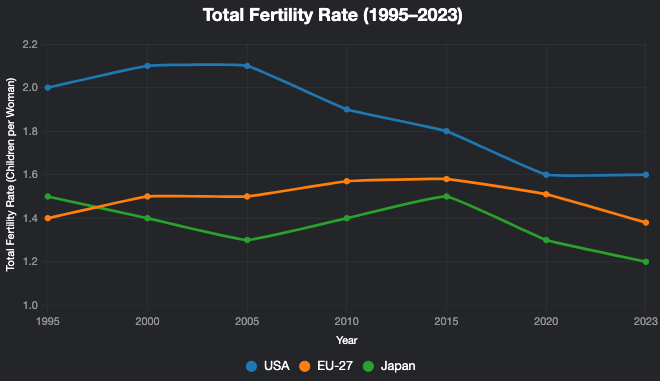
  • America’s fertility rate is 1.66. I’m part of the problem — 39 with no kids thus far.

    With so few babies being born, America’s leadership is at risk. So, how do we get people to have some kids around here?

    Here are a few company ideas that might fix this mess:

    1) Better IVF. A single cycle of IVF runs around $20,000. Many women take 3 or more cycles to have a baby.

    What if IVF were cheaper and more effective? What if it cost $1,000 and it only took 1-2 cycles?

    When you lower the cost of something, you get more of it.

    This could involve easier methods of egg retrieval, better preimplantation genetic testing, etc.

    2) Make Embryos Great Again. As women get older, the quality of their eggs tends to fall.

    Apps to help women track their food and exercise, helping them optimize for egg health, could be interesting.

    Another option is to help women freeze their eggs sooner and more cheaply.

    The startup Cofertility has a fascinating spin on this. You can freeze your eggs for nothing if you donate half to another family.

    This is absolute genius. I would’ve loved to invest had I seen the deal.

    Alas, I did not. Next time!

    3) Back to the Land. Urbanization is bad for fertility. Space is at a premium and costs are eye-watering. Indeed, urbanization is negatively correlated with fertility all over the world.

    If folks could live in rural areas more easily, they might have bigger families.

    But rural areas can be hard to live in. All too often, schools are bad and jobs are few.

    Bringing better education and jobs to rural areas would help.

    Take Primer, a fascinating tool to pop up your own microschool of 25 children. You pick the teacher — no union involved. This way, you can get the best person on earth, even if he’s in India.

    I only wish I had seen Primer’s seed round. I would’ve loved to invest!

    4) Be Fruitful and Multiply. Religious families tend to have more children. One of the best ways to promote families could be a Bible study app.

    Imagine a Duolingo for the Bible. How does this not exist? And yet, I can’t seem to find one.

    We also need apps for natural family planning and apps to get religious communities together outside church.

    There are countless possibilities here. And they’re a lot more interesting than the 100th AI SDR.

    Wrap-Up

    More babies means more fun! It’s so great smiling at them, waving to them, and making funny faces.

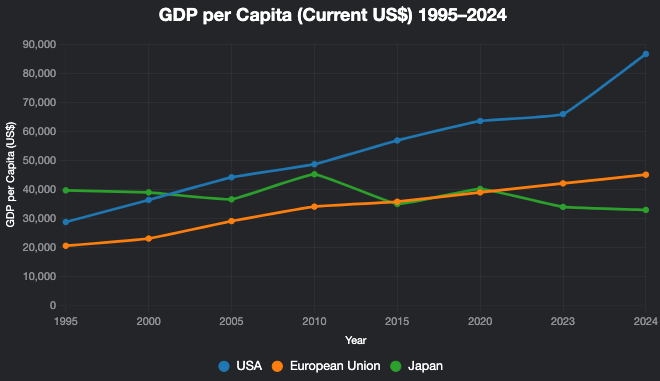
    Moreover, a country and a world cannot thrive without humans. Aging, declining populations get poorer and poorer, as we’ve seen in Japan.

    If you’re interested in this issue, I heartily recommend the book Empty Planet. It gives a great overview of the problem.

    Now it’s our job to fix it.

    This is the last of the Empty Planet series. I’ll be back tomorrow with something…completely different. 🙂

    Ciao!

    More from the blog:

    Empty Planet (Part Two)

    Empty Planet (Part One)

    The Fertility Crisis

    Save Money on Stuff I Use:

    Fundrise

    This platform lets me diversify my real estate investments so I’m not too exposed to any one market. I’ve invested since 2018 with great returns.

    More on Fundrise in this post.

    If you decide to invest in Fundrise, you can use this link to get $100 in free bonus shares!

    Misfits Market

    I’ve used Misfits for years, and it never disappoints! Every fruit and vegetable is organic, super fresh, and packed with flavor!

    I wrote a detailed review of Misfits here.

    Use this link to sign up and you’ll save $15 on your first order.